Tuesday, May 12, 2026
Home Blog Page 9

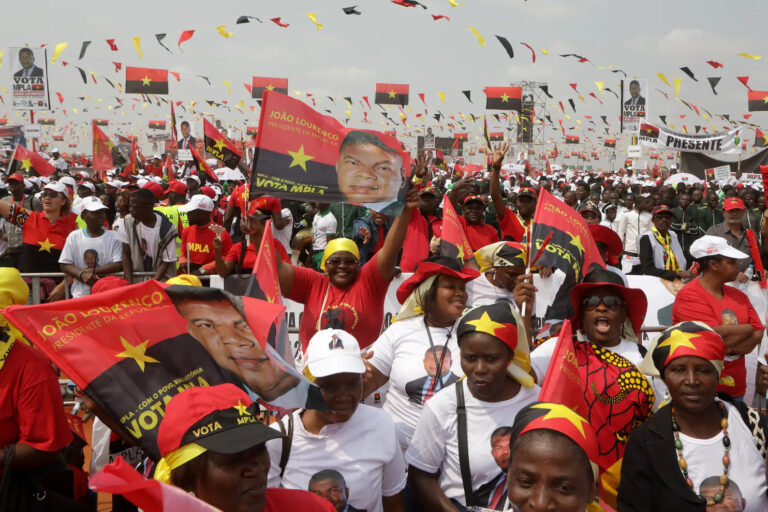
Noose tightens on Press Freedom ahead of Angolan general elections

The African Freedom of Expression Exchange (AFEX) strongly condemns the harassment, physical attacks and threats against journalists in Angola. We call on the Angolan authorities to conduct in-depth investigations into the violations and sanctions their perpetrators.

Angola goes to the polls on August 24, 2022, and amidst campaigns and violent clashes between political parties, at least three journalists have reported cases of harassment, threat or physical assault in the exercise of their duty.

On July 1, Isabel Makitoko, a reporter for the private online media TV Maiombe, was barred by supporters of the ruling People’s Movement for the Liberation of Angola (MPLA) from covering a demonstration by the opposition National Patriotic Alliance party in the Viana suburb of Luanda, Angola’s capital. The MPLA supporters allegedly forbade the journalist to film in the area and threatened to damage her phone, media reports said.

One of the supporters attempted to hit Makitoko in the face, but António Sapalo, a reporter for the privately-owned news website Correio da Kianda, intervened. Sapalo was physically assaulted by other supporters as he attempted to help his colleague.

According to reports, police officers on duty looked on as the journalists were attacked claiming they did not receive any orders.

In another incident which occurred on July 16, 2022, security officers accompanying Adalberto Costa Júnior, leader of the opposition party National Union for the Total Independence of Angola (UNITA), physically assaultedWilson Capemba of Radio Ecclesia during a rally of the said party.

“I was almost lynched this Saturday by bodyguards of the President of a major opposition political party, and by some members of his protocol, when in the course of my professional activity, I wanted to interview the leader of the party,” Wilson wrote in a Facebook  post. “I suffered some physical injuries, not to mention psychological damage, due to how brutally I was approached. The security guards treated me as if I were an armed man to the teeth and that I intended to take the life of their leader.”

The journalist reported the leader of the party, Adalberto Júnior, had to intervene to control the situation. After the timely intervention of party leader, he was subsequently granted the interview.

AFEX is concerned about threats to press freedom in Angola and urges the authorities to protect press freedom as well freedom of expression before, during and after the presidential elections.

Terror attacks in the Sahel: Media actors from 16 countries demand action

The Media Foundation for West Africa (MFWA) and its partner organisations in all the 16 countries in West Africa have expressed deep concern about the deteriorating freedom of expression environment in West Africa, especially in Burkina Faso, Mali and the rest of the Sahelian region.

The concern was raised during a virtual meeting held by the 16 organisations on August 5, 2022, to deliberate on the situation in the two countries and the rest of the region.

The safety of journalists’ conditions has become a point of high concern following recent terrorists attacks in Burkina Faso and Mali which have claimed over 270 lives. The situation has forced many journalists to either self-censor or abandon the profession.

The insurgency and the counter-insurgency in the two countries have led to a keen competition between the insurgents and the government to win the empathy and allegiance of the people. As a result, each side is hypersensitive to media reports and tends to put pressure on journalists to avoid “unfavourable” publications about them.

This has led to widespread self-censorship on the situation. Social media comments on the conflict are also heavily censored as journalists and members of the public fear being targeted as anti or pro-government, for fear of reprisals – a situation that is contributing to shrinking civic spaces in the two countries.

While professionalism requires that journalists publish only verified information, journalists in the two countries find it difficult to independently verify certain issues and dispute official statements related to the insurgency as they risk being attacked. This situation is contributing to the spread of mis/disinformation.

The regulatory environment in the two countries also does not bode well for journalism practice. For a long time, Mali has not updated its media laws. This has resulted in the use of outdated frameworks to regulate the media industry, alongside capricious decrees by the military, which has twice seized power over the past two years.

The Burkina Faso situation is quite similar to that of Mali. A number of decrees have been adopted to restrict reporting on the conflict in the country. Presently, the Burkinabe government is pushing for the prerogative to restrict liberties for a period of time. This has raised concerns about possible abuse and interference in the different sectors, including the media industry.

The precarious safety of journalists’ conditions in the two countries have come at a time when there is an escalation of freedom of expression and media rights violations in the region. In almost all the countries in the region, journalists continue to face reprisals for some of the news reports they produce. This happens both offline and online.

In some instances, journalists are picked up after reporting or commenting on an issue. There is also the practice of imposing crippling fines, as well as  surveillance.

In addition to the arbitrary arrests and detentions by state security agents, political party thugs are increasingly attacking journalists and media houses physically and also online (especially on social media). The threats, intimidations and harassment are forcing some journalists and media houses to self-censor.

In the light of these developments, the MFWA and its partner organisations are calling on the ECOWAS, the African Union (AU), and the international community to, as a matter of urgency, engage the governments of Burkina Faso and Mali and provide the needed resources and technical support to help restore democratic governance, and also fight the insurgency. The same support should be extended to other countries in the Sahelian region and the rest of the West Africa region where similar attacks have been recorded.

On our part, the MFWA and its partner organisations plan to engage more in these countries, including undertaking a mission to engage and strengthen the capacities of media stakeholders in the two countries. We also plan to strengthen the capacities of journalists and media houses on conflict-sensitive reporting, as well as safety and security measures to adopt in such a hostile environment.

We encourage all actors to support in creating an enabling environment for journalism practice in the two countries so the media can constructively contribute to the restoration of democratic governance, peace and stability inthe two countries.

This statement is jointly issued by:

Media Foundation for West Africa (MFWA) – Ghana

International Press Centre (IPC) – Nigeria

Association Guinéenne des éditeurs de la Presse Indépendante (AGEPI) – Guinea

Regroupement de la Presse Mauritanienne (RPM) – Mauritania

Observatoire de la Liberté de la Presse, de l’Ethique et de la Déontologie (OLPED) – Côte d’Ivoire

Gambia Press Union (GPU) – The Gambia

Observatoire de la Déontologie et de l’Ethique dans les Medias (ODEM) – Benin

Syndicat des Professionnels de l’Information et de la Communication du Sénégal (SYNPICS) – Senegal

Media Reform Coordinating Group (MRCG-SL) – Sierra Leone

Sindicato De Jornalistas e Tecnicos De Comunicacao Social Guinea Bissau (SINJOTECS) – Guinea Bissau

Union des Journalistes Indépendants du Togo (UJIT) – Togo

Centre National de Presse – Norbert Zongo (CNP-NZ) – Burkina Faso

Centre for Media Studies and Peace Building (CEMESP) – Liberia

Maison de la Presse – Mali

Observatoire Nigérien Indépendant des Médias pour l’Ethique et la Déontologie (ONIMED) – Niger

Associação dos Jornalistas Cabo-verdianos (AJOC) – Cape Verde
AMDISS Denounces the Continued Detention of Female Journalist Diing Magot, Calls for her Immediate Release

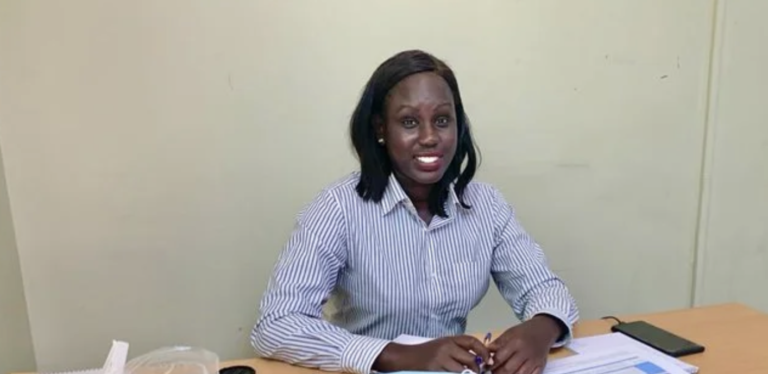
Juba-South Sudan, August 12, 2022, Association for Media Development in South Sudan (AMDISS) is deeply concerned over the continued detention of female journalist Diing Magot, a freelance reporter for the Voice of America in South Sudan.

Diing was arrested on Sunday, August 7th, 2022 near Nyakuron Cultural Centre while she was coming back from covering a peaceful protest at Konyo-Konyo Main Market. She was first taken to Buluk Police Station where she spent a night, later transferred to Melekia Police Station, and finally relocated to Juba Central Prison on Tuesday, August 9th, 2022.

AMDISS has been following the case closely together with other media institutions. However, it is not clear why government authorities continued to detain the journalist. Information from the police indicates that the journalist was not found with any identification (ID) at the time of her arrest. Though later the media house which she works for, wrote a letter certifying that Diing is their correspondent in South Sudan. Other relevant documents including her IDs were also availed to the authorities to prove that she is a journalist.

The continued detention of this journalist after all the above efforts, is a big concern to AMDISS and the entire media fraternity in South Sudan. It has serious repercussions on press freedom and the safety of journalists, especially female journalists as this could force journalists into self-censorship to avoid being arrested and detained.

AMDISS, therefore, calls upon authorities in charge to release Diing Magot immediately. Journalist Diing did not commit any crime. She was only doing her job as a journalist, fulfilling her duty given to her by the Transitional Constitution of South Sudan 2011.

We urge journalists and media houses to continue upholding journalism ethics and the code of conduct of the practice of journalism in the Republic of South Sudan.

For more information on this press release contact the following: Mr. Koang Pal Chang, Chairperson of AMDISS at [email protected] or call +211 922 814 414

Journalists charged with publishing false data messages

What happened

Alpha Media Holdings editor-in-chief Wisdom Mdzungairi and senior reporter Desmond Chingarande were on the 3 August 2022 arrested and charged over a story they published pertaining to the legal squabbles relating to Glenforest Memorial Park in Harare.

The two are being accused of contravening Section 164C of the Criminal Law (Codification and Reform) Act, as amended through the Cyber and Data Protection Act, which relates to publishing false data messages intending to cause harm.

Lawyer, Jeremiah Bamu, who was deployed by MISA Zimbabwe said the police recorded their warned and cautioned statements and advised that they would be notified of the court dates.

AMH are publishers of NewsDay, Zimbabwe Independent and The Standard newspapers.

MISA’s position

MISA Zimbabwe reiterates its long-standing position that when journalists are undertaking their professional duties, they will be exercising their constitutional rights as stipulated in Section 61 of the Constitution and that they have a right to seek, receive and impart information.

Any limitation to this right should qualify under the three-pronged test, which requires legality, proportionality and necessity. It is also our position that criminal sanctions on false news are disproportionate and not necessary.

The Constitutional Court in the case of Chimakure and Others vs The Attorney General and Others, stressed this position with regards to Section 31 of the same Criminal Law (Codification and Reform) Act which criminalises publishing or communicating false statements prejudicial to the State.

The Court said that such provisions have a chilling effect on free expression. Quoting the UN Special Rapporteur, Deputy Chief Justice Malaba, as he then was, noted the following:

“In the case of offences such as publishing or broadcasting “false” or “alarmist” information, prison terms are both reprehensible and out of proportion to the harm suffered by the victim.  In all such cases imprisonment as punishment for the peaceful expression of an opinion constitutes a serious violation of human rights.”

The civil claim of defamation is already in existence for persons aggrieved by a story published by a journalist or media house, or where they are of the opinion that the story was false.

This civil route equally applies to the provisions of Section 164C if a person suffers economic harm or psychological harm. If anything, Section 164C resuscitates criminal defamation which was already outlawed in the case of Madanhire vs Minister of Justice and Others.

In that regard, MISA Zimbabwe appeals to the legislature and other key stakeholders, including the Attorney General’s Office and the Ministry of Justice, Legal and Parliamentary Affairs to do away with these unconstitutional provisions that continue to criminalise publishing of falsehoods.

Nigeria: Regulator’s Fine on Trust TV Arbitrary and Unacceptable

For Immediate Release, Wednesday August 3, 2022

The International Press Centre (IPC), Lagos-Nigeria is miffed that the National Broadcasting Commission has slammed a hefty fine of Five million Naira (about USD 12,000) on Trust TV over the broadcast of a documentary on the state of insecurity in the country titled ‘Nigeria’s Banditry: The Inside Story’.

The imposition of the arbitrary fine was contained in an August 3, 2022 letter to the Chief Executive Officer of Trust TV Network Ltd by the Director General of NBC, Balarabe Shehu Ilelah.

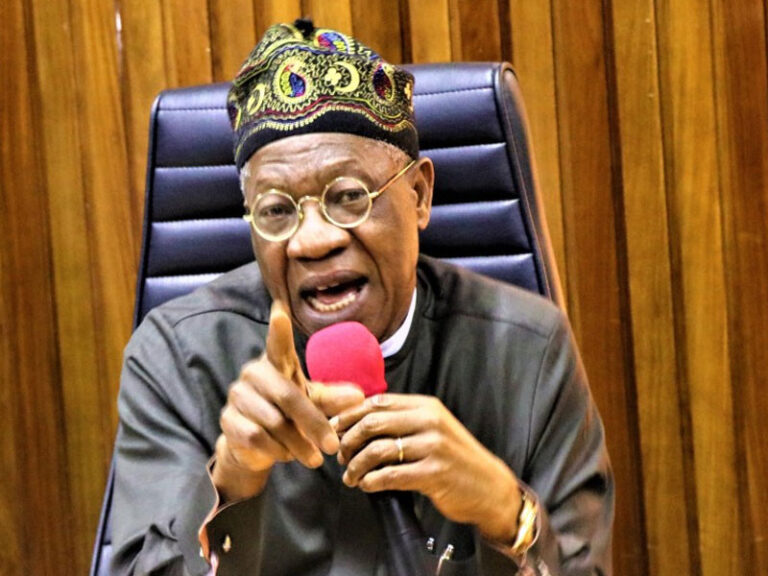
Following the threat by the Information Minister, Mr. Lai Mohammed, that the TV station and BBC would be sanctioned for airing the documentary, IPC had issued a statement warning the Federal Government to refrain from constituting itself to the accuser, the prosecutor and the judge in its own case.

IPC is dismayed that the Federal Government through the NBC has shamefully done that, forgetting that in a democracy the basic tenets of the rule of law cannot be trampled upon as it suits the whims and caprices of those in the corridors of power.

In the above context, it is worth pointing out that Trust TV was neither notified of the alleged infringement of sections 3.1.1, 3.12.2 and 3.11. 2 of the Nigeria Broadcasting Code nor requested to defend itself against the allegations before the fine was handed down. In other words, there was no fair hearing for Tust TV, but one-sided hearing of the accusation by the Information Minister upon which the NBC acted.

It is unacceptable that NBC, funded by tax payers money and expected to act in the public interest, would continuously exhibit the symptoms of an attack dog of the government once the Information Minister blows the whistle.

The Federal Government, the Information Minister and the NBC must be made to understand that the banditry ravaging the country and daily putting the lives and property of the citizens in jeopardy is not a creation of the media, which has through editorial opinions, investigations and broadcast programmes offered suggestions and support to the government on the way out of the general insecurity.

At the same time, in line with its constitutional obligation to monitor governance and hold the government accountable to the people, the media has also been critical of the inability of the government to fufill its own part of the constitutional bargain by guaranteeing the lives and security of the people.

“In the circumstance, the IPC considers the fine imposed on Trust TV an act of injustice, an assault on media freedom and a violation of the right of the people to know the truth about the dynamics of banditry in the country and the decision should therefore be reversed”, said the Executive Director of IPC, Mr. Lanre Arogundade.

We call on the Broadcasting Organisations of Nigeria, Nigerian Guild of Editors , the Nigeria Union of Journalists and other bodies championing freedom of the press and freedom of expression in the country to rise in unison in condemnation of this new development and hostility by the government.

E- SGD:

Melody Lawal
Press Freedom Officer, IPC
[email protected]

IPC Condemns Government’s Threats Against the Media

The International Press Centre (IPC), Lagos Nigeria is worried by the recent utterances by the Federal Government of Nigeria threatening to sanction the BBC and Trust television for airing documentaries that allegedly glorified and fueled terrorism and banditry in Nigeria.

In a report published by Premium Times July 28, 2022, the Minister of Information and Culture, Lai Mohammed said, “the federal government is aware of the ‘unprofessional documentary’ by the BBC Africa Eye, where interviews were granted to bandit warlords and terror gangs, thereby allegedly promoting terror in the country”.

The Minister also condemned Trust Tv, owned by Media Trust Ltd, for using its platform to grant an interview to a bandit, Shehu Rekeb, thereby allegedly promoting the activities of terrorists.

While it is appropriate for the government to complain against any news report it finds offensive it is preposterous and indefensible that the same government will hastily conclude that “appropriate sanctions would be meted out to both platforms”,

According to the Executive Director of IPC, Mr. Lanre Arogundade, it is trite law that Mr. Lai Mohammed, who is also a Lawyer, cannot be the accuser, prosecutor and judge in the matter at hand.

Rather than proclaim the media houses guilty, the minimum standard of expectation is that the federal government would develop a petition and dispatch same either to the concerned media or to appropriate regulatory bodies for intervention and wait for them to act.

Mr. Arogundade said that the threat by the federal government to sanction BBC and Trust Tv could be interpreted as an attempt to stifle information flow in the country.

“This threat is an attempt among several others by the government to suppress information flow from the media. Sanctioning media organisations for granting interviews to bandit warlords on issues that have to do with the security challenges facing the country is also a subtle attempt at suppressing the rights to information”, he added.

“While we are all affected by the spate of insecurity in the country, credible information is equally key towards getting to the root cause of the worrisome development. However, what this threat aims to achieve is to make the media a one-faced channel of information where it is only permitted to give perspectives from government sources; this is inconsistent with journalistic practice of engaging in balanced coverage and providing balanced information to citizens,” Mr Arogundade stated further.

IPC noted that the fundamental rights of freedom of expression by citizens and media freedom should be guaranteed and respected and the government should not dictate how the media should present its report to the public.

SGD:
Melody Lawal
Program Officer/Safety Desk Officer IPC
[email protected]
+2348132776441

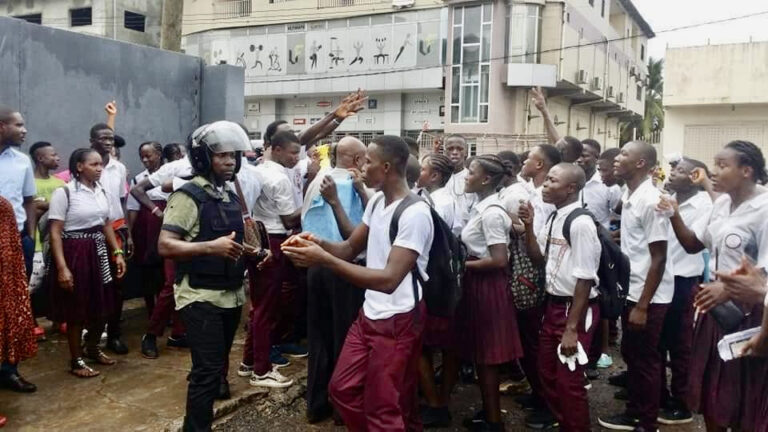
CEMESP Condemns Violence Against Protesting Students

Monrovia, July 27, 2022: The Center for Media Studies and Peacebuilding (CEMESP) has condemned in the strongest terms the violence meted out against protesting students of the University of Liberia’s Student Unification Party outside the United States Embassy on July 26.

The CEMESP says there can be no justification for anyone to be brutalized by thugs for expressing their views regardless of how their opponents feel.

The group says the barbarous act of the thugs led by a known partisan of the ruling Coalition for Democratic Change must be responded to forcefully by government if the impression that it was state sponsored is to be avoided.

The group noted that the violent act which went unchallenged by the police and other state security agents was reminiscent of similar actions carried out during Liberia’s civil war and its many years of dictatorships.

In a statement released in Monrovia, CEMESP called on the government to immediately arrest each of the thugs shown violently assaulting a protester in the video of the incident and speedily bring them to justice for their crimes, as a way of discouraging any future occurrence of such act.

The Media development and freedom of expression group noted that Liberia has felt too much pains for state authorities to allow people to settle their disagreement with others by resorting to thuggish and extrajudicial violent action.

CEMESP is therefore cautioning the government to espouse a zero tolerance for thuggish jungle justice as an unjustified attack on peaceful protesters could trigger the desire for and perpetration of counter action by rival groups, which is a recipe for dragging the country into anarchy.

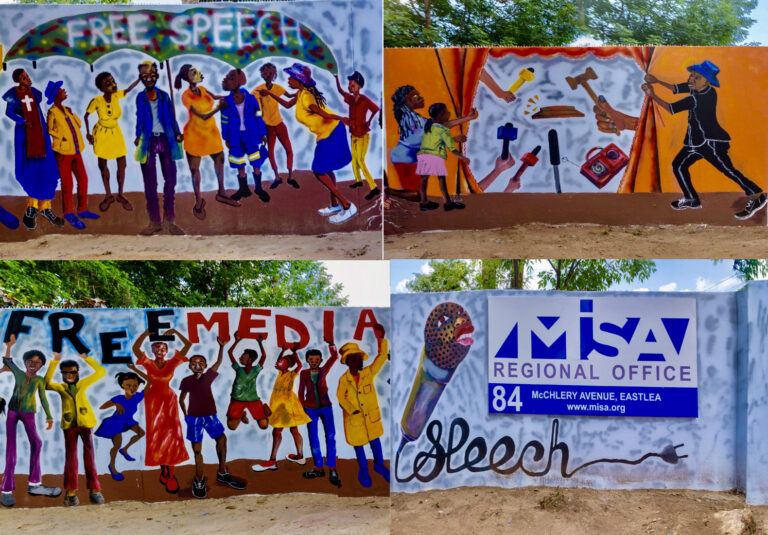
MISA’s Annual Report Highlights Freedom of Expression and Digital Rights Issues in Southern Africa

The year 2021 was one of consolidation and the repositioning of our organisation in the aftermath of the several headwinds that we faced.

When we started this journey – midway through 2021 – we dared to dream and our dreams are now becoming reality. We took a leap of faith and the results are beginning to show.

While we have managed to score some successes, this is not the time to rest on our laurels, but to continue rolling our sleeves and getting the work done.

In 2021 we restructured our Regional Governance Council (RGC) and took the necessary steps to reclaim the ground that we had lost.

The next step was to come up with a new strategy document covering the period 2021 to 2026.

These processes were foundational and vital for MISA to reposition itself as the thought leader in terms of freedom of expression and of the media in Southern Africa.

The strategy is instructive as it forces us to introspect and chart the future of this historical and formidable organisation that turns 30 years this year.

It cannot be business as usual because we have a lot of ground to cover to ensure that we consolidate our status as the regional shield in defence of expression in Southern Africa amid a complex and ever-changing environment as attacks are coming from both the usual and unusual places.

The 2021 MISA Regional Annual Report features country reports snapshots from Angola, Botswana, Lesotho, Malawi, Mozambique, Tanzania, Zambia and Zimbabwe.

To access the full report: kindly click this link

Nigeria: Media Rights Agenda, Others Win Suit over Twitter Ban

0

The ECOWAS Community Court of Justice has ruled that the indefinite suspension of access to Twitter in Nigeria by Federal Government in June 2021 was unlawful and violated the provisions of the African Charter on Human and Peoples’ Rights (ACHPR) and the International Covenant on Civil and Political Rights (ICCPR). The Court ordered the Government to guarantee that it would not repeat the unlawful ban on Twitter.

In its judgment delivered on July 14, 2022 in four consolidated suits filed by Media Rights Agenda (MRA), other non-governmental organisations, journalists and some Nigerian citizens challenging the Government’s June 4, 2021 decision to suspend access to Twitter in Nigeria, the Court ordered the Government of Nigeria to take necessary steps to align its policies and other measures to give effect to the rights and freedoms enshrined in the ACHPR and the ICCPR.

The four suits that were consolidated are:

  • Suit No. ECW/CCJ/APP/29/21 filed by Mrs. Mojirayo Ogunlana-Nkanga on behalf of Media Rights Agenda and four other non-governmental organizations, namely: Paradigm Initiative (PIN), Premium Times Centre for Investigative Journalism (PTCIJ), the International Press Centre (IPC), and Tap Initiative for Citizens Development (TICD) as well as four journalists, Mr. David Hundeyin, Mr. Samuel Ogundipe, Ms Blessing Oladunjoye, and Mr. Nwakamri Zakari Apollo;
  • Suit No. ECW/CCJ/APP/23/21, filed by Mr. Femi Falana (SAN), on behalf of Socio-Economic Rights and Accountability Project (SERAP), a Lagos-based NGO, and 176 Nigerians;
  • Suit No. ECW/CCJ/APP/26/21. Filed by Mr. Patrick Elohor, President of the NGO, One Love Foundation; and
  • Suit No. ECW/CCJ/APP/24/21, filed by Chief Malcolm Omirhobo, a Lagos-based human rights lawyer.

The applicants contended in the suits that the suspension of the social media platform, Twitter, in Nigeria amounted to a violation of their fundamental rights, including their rights to freedom of expression and access to information.

The consolidated suits were heard by a panel of three judges consisting of Justice Gberi-Be- Ouattara, presiding; Justice Keikura Bangura, who is the judge rapporteur; and Justice Januaria Costa.  The Court ordered the consolidation of the four separate suits at its hearing on July 9, 2021 following a motion by the lawyer representing the Nigerian Government, Mr. Abdullahi Abubakar, who applied for the suits to be heard together since they were all dealing with the same subject matter.

Delivering judgment on July 14, the Court declared that contrary to the claim of the Federal Government, it had jurisdiction to hear and determine the suits.

It also dismissed the Government’s challenge to the admissibility of the suits, declaring that the applications were admissible.

Ruling on the merit of the cases, the Court declared that the act of suspending the operation of Twitter in Nigeria was unlawful and inconsistent with the provisions of Article 9 of the African Charter on Human and Peoples’ Rights and Article 19 of the International Covenant on Civil and Political Rights.

The Court also declared that the act of the Government in suspending the operation of Twitter violated the applicants’ rights to the enjoyment of freedom of expression and access to information as it is contrary to the provision of Article 9 of the ACHPR and Article 19 of the ICCPR.

But it held that the applicants’ rights to fair hearing under Article 7 of the Africa Charter was not violated.

The Court consequentially ordered the Government to lift the suspension of Twitter since the suspension was in contravention of Article 9 of the African Charter and Article 19 of the ICCPR.

It also ordered the Government to take necessary steps to align its policies and other measures to give effect to the rights and freedoms enshrined in the African Charter and the ICCPR as well as undertake an act of legislative or other measures on the rules of Twitter to enable the enjoyment of the right to freedom of expression guaranteed under the African Charter.

The Court directed the Government to guarantee a non-repetition of the unlawful ban of Twitter but dismissed all other claims by the applicants.

On the issue of costs, the Court ordered the Government to bear the cost of the proceedings and directed the Deputy Chief Registrar of the Court to assess the cost accordingly.

DRC: Journalist fears for his life after being detained and tortured by M23 rebels

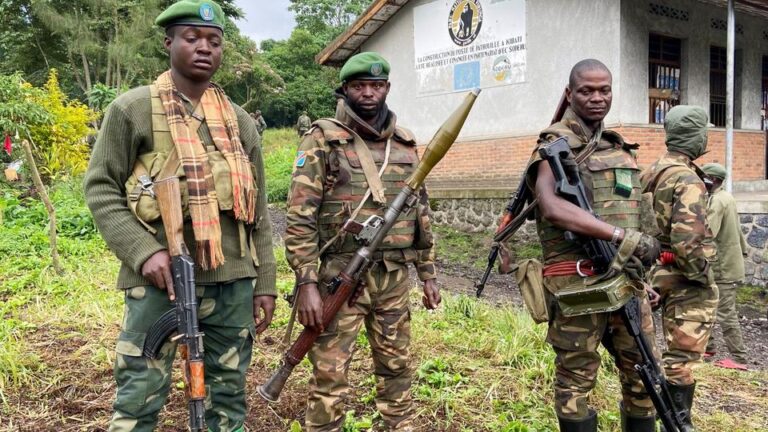
Hererimana Serushago, a journalist working for the community radio station “La Voix de Mikeno” in Bunagana, Rutshuru territory, North Kivu province, lives in fear of finding himself once again in the hands of the M23, a notorious rebel military group. The group captured him on July 5, 2022, for no reason while he was conducting interviews in a displaced persons camp.

The journalist was tied up and viciously tortured by a group of young supporters and members of the rebel movement throughout the day before being abandoned in the street at the request of a member of the group. They forbid him to denounce their crime, under threat of being murdered.

Hererimana Serushago has been in hiding for a week and is getting treatment by his own means. The young people, close to the M23 who tortured him, know him well, since they live in the same estate in Bunagana.

Uganda: Two Journalists Remanded Over Murder

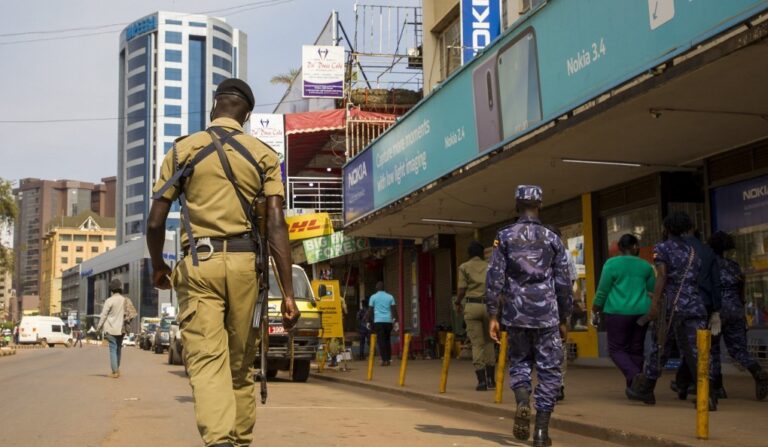
Court in Jinja, Uganda on July 6, 2022, remanded two journalists to wit Mutyaba Ivan of Busoga One and Isabirye Denis Baba FM to Kirinya Prison until 28th July 2022, after being charged with two counts of murder and conspiracy to murder.

The charges relate to the murder of a Jinja city businessman Shaban Malole who was gunned down on May 14,2022 by unknown gunmen. On that day the duo had gone to his home to interview him about a family land wrangle, but did not find him and decided to interview him on phone.

Two of the journalists that were with the duo were earlier released on police bond on similar charges.

The journalists are jointly charged with other suspects who were remanded earlier to the same prison.

The Executive Director of HRNJ-UGANDA, Robert Ssempala has said that the four suspected journalists were on several occasions reporting about the said family land conflict, which we believe is the reason for implicating them in the said murder. He has said that a legal team has been put in place to defend the journalists since they were on duty doing regular media work.

Gambia: GPU Condemns Arbitrary Arrest of Journalist Yusef Taylor

Fajara, 7 July, 2022The Gambia Press Union (GPU) has received official reports that on the 5th of July 2022, Yusef Taylor, a journalist who is also the Editor-in-Chief of Gainako Online, was arbitrarily arrested and reportedly charged with “obstructing a police officer in the execution of his duty”.

Mr. Taylor was detained at the Senegambia Police Station for four hours after attempting to report on the latest arrest of Neneh Freda Gomez and Lamin Sey of the medical charity, Global Home of Medical Mission (Global HoMM).

Global HoMM is involved in a dispute with the Government of The Gambia over a plot of land for which the former has obtained court judgements in its favour as being the rightful owner of the land on which the government is said to earmarked for the construction of a hotel for the 2022 OIC Summit.

Mr. Taylor has consistently reported on this case including fact-checking government statements and narratives on the matter, and had found some of these claims to be “false or misleading”.

He was released late Tuesday evening and said he was informed by the police that he is charged with “obstruction”.

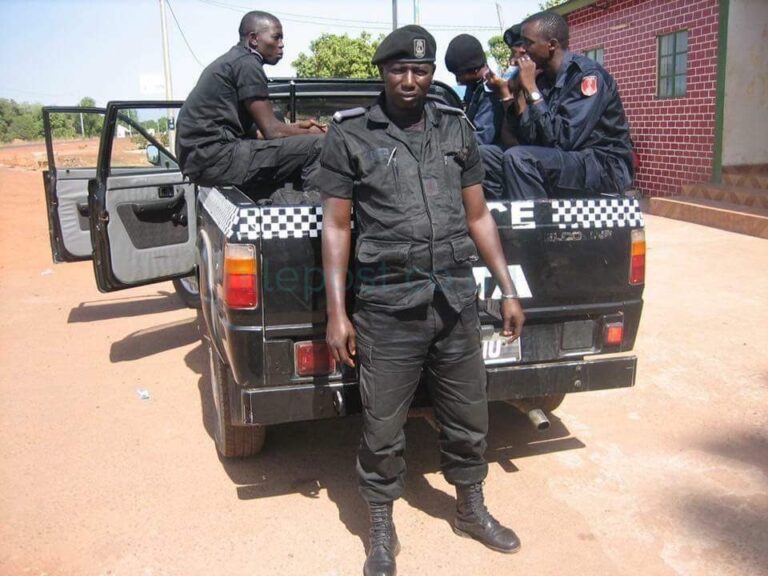
Taylor was arrested after police officers forcibly tried to remove him from the station’s premises (thereby assaulting him) when he tried to enquire about the detention of the Global HoMM representatives Neneh Freda Gomez and Lamin Sey.

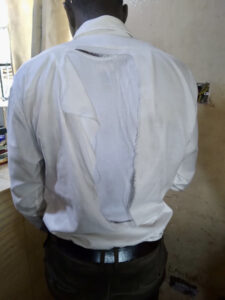
After initially trying to force him out of the station in a highhanded manner, leading to the tearing of his shirt, the officers then decided to drag Mr. Taylor into the station and locked him up in one of the cells, according to a colleague who witnessed the incident and a GPU Safety Officer who visited the police station where the journalist was held.

“The GPU condemns the actions of these officers in their entirety, and is dismayed by the unfortunate never-ending trend of journalists being assaulted by security personnel, especially the police,” GPU President, Muhammed S. Bah, said.

This incident is reminiscent of the events of June 2020, when Ebou N. Keita was arrested, detained, and later released without charge for photographing police officers arresting people protesting against the country’s COVID-19 restrictions.

“It is also a stark reminder that while the exercise of free speech and press freedom guaranteed under the 1997 Constitution has significantly improved since 2017, more needs to be done to better protect the rights of journalists who continue to come under attack from security forces for simply carrying out their constitutional duty of holding the government accountable,” Bah said.

The GPU calls on the Gambia Police Force to exercise restraint and cease from the use of force on journalists who have a significant mandate of not only holding the government to account, but promoting the public’s right to know – a fundamental aspect of freedom of expression, access to information and the promotion of democracy and good governance.

This afternoon, July 7, 2022, Mr. Taylor informed the GPU that he was called by the police and asked to report to the same police station where he was held on Tuesday. He is also asked to report to the police tomorrow, July 8 at 1pm.

The alleged offence is considered assault under section 230(b) of the Gambian Criminal Code which carries a two-year prison term if one is found guilty, according to GPU research.

“We call on the police to drop the charge of ‘obstruction’ against Mr. Taylor without condition and stop the continuous harassment of the journalist by asking him to be reporting to the Senegambia Police Station,” GPU Secretary General, Modou S. Joof, said.

“Journalists are not the enemy, and we believe that the principles of the Constitution can only be upheld when journalists are allowed to do their work without harassment, intimidation, and arbitrary arrests,” Joof said.

The GPU is committed, ready and willing to continue engaging state authorities and security sector leaders with a view to promoting an enabling environment for press freedom, especially with regards to the safety of journalists.

– Ends

For inquiries,

Contact GPU Secretary General

Tel: +220 348 0043

Email: pressuniongambia[@]gmail.com