Tuesday, May 12, 2026
Home Blog Page 48

Closure of Private Newspaper in Zambia, Unacceptable – AFEX

The African Freedom of Expression Exchange (AFEX) joins the Media Institute of Southern Africa (MISA) to express its deepest concern over the closure of The Post newspaper in Zambia.

The Zambian Revenue Authority (ZRA) on June 21, 2016 closed down The Post newspaper Limited, demanding that the company pays a total of K68 million (US$6.1 million) in disputed tax arrears.

The media is an important tool in fostering participatory democracy and building strong public institution. As Zambia goes to the polls in August 2016, the media is expected to play a critical role in public discourse. Closing the newspaper is therefore a backward step in Zambia’s democracy.

AFEX finds the decision of the ZRA to close down the paper as hasty and an affront on press freedom. We urge the tax authorities to allow the paper to operate while the issue is resolved. We also call on the Zambian Government to intervene in the matter and ensure the immediate return to the stands of the paper.

MISA Zambia Saddened by Closure of The Post Newspaper

This article was originally published on misa.org June 23, 2016.

MISA Zambia is concerned with the closure of The Post Newspaper by the Zambia Revenue Authority (ZRA) as the action is an assault to democracy and against media freedom.

The Zambia Revenue Authority on Tuesday 21st June, 2016 closed The Post Newspaper Limited, demanding that the company pays a total of K68 million (US$6.1 million) disputed tax arrears immediately.

Closing the Post will not punish the owners but its readers as the paper has immensely contributed to the maintenance of a pluralistic society in which different views, even those considered to be critical and dissenting have been accorded space.

It must be stated that freedom of the media and freedom of expression are core principles of democracy where free, diverse and independent media constitute the cornerstone of a democratic society by facilitating free flow of information and principles of transparency and accountability.

While media institutions, like other entities, need to be up to date with their statutory obligations, it is expected that they are treated in a fair manner and accorded a chance to be heard where disputes are raised following due process.

It is also important to uphold the principle of non-discrimination in tax issues and it is expected that the same treatment given by the ZRA to The Post should be extended to other media outlets that are owing the authority.

There is evidence to suggest that The Post is not the only media house that has tax problems in Zambia which clearly shows that the closure of the Post is political move that is beyond tax issues as alleged.

MISA Zambia therefore appeals to government to stop harassing the Newspaper so that it continues with production as the move to close the Post will have an effect on the employees who have now been sent out of employment.

Uganda: Journalist Remanded Over Criminal Defamation Charges

0

This statement was origninally published on hrnjuganda.org on June 21, 2016.

Waligo Sadati a journalist with Red Pepper, based in Lyantonde District has today 21st June, 2016 been remanded over criminal defamation charges. He was remanded to Kakondo prison until Thursday 23rd June, 2016, by Lyantonde Grade One magistrate Muyinda Tadeo. Sadati is accused of defaming the Lyantonde Resident District Commissioner, Sulaiman Tugaragara Matojo. Prosecution, alleges that Sadati on 17th January, 2016, published a defamatory statement against Matojo in Kamunye newspaper.

On the other hand, Buganda Road Chief Magistrate, Karemani, continued hearing another criminal defamation case in which four journalists, Ronald Nahabwe and Benson Tugumisirize of the Red Pepper, Madina Nalwanga and Patrick Tumwesigye of the New Vision are accused of defaming Kampala business men, Ephraim Ntaganda and Drake Lubega.

The Police Investigating officer, James Kalibuliro, while being cross examined by the journalist’s lawyers said he does not “recall” what he recorded in his statement, when asked to recollect what he wrote in his statement. Asked further whether he found it necessary to investigate land grabbing claims as reported in the newspapers, he said no.

He told Court that Ntaganda the complainant told him that the allegations that appeared in the newspapers were false. On the basis of Ntaganda’s information and the newspaper Articles, he arrested the journalists. Asked whether he verified who has the responsibility of publishing articles in the newspapers, he said it was the accused persons responsible not the news. Pressed further on whether it was the accused persons responsible for publishing Newspapers Articles, he said it was the media houses.

The case was adjourned to 15th July, 2016 for further cross examination.

“We are concerned about the escalating criminal defamation charges against journalists. We believe that the journalists are deliberately targeted. We condemn such practices and call upon police to respect media freedom,” said the HRNJ-Uganda National Coordinator, Robert Ssempala.

AFEX Demands Immediate Release of Detained Sudanese Students

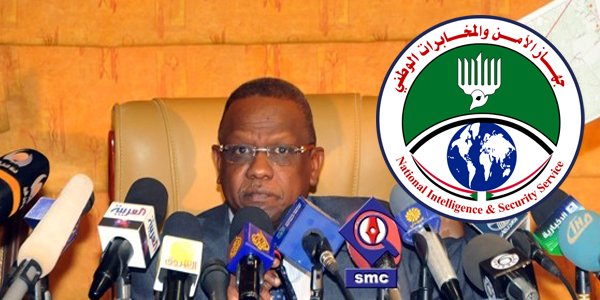
The African Freedom of Expression Exchange (AFEX) demands Sudan’s National Intelligence and Security Services (NISS) to immediately release the eight students who have been detained incommunicado without charges.

On May 3, 2016, 17 students were expelled from the University of Khartoum following a protest held on April 27, 2016 on the university campus. Two students were reportedly shot dead by agents of the NISS during the said protest.

On May 5, eight of the 17 expelled students went to the office of prominent Sudanese lawyer, Nabil Adib, to seek legal assistance regarding their expulsion by the university’s authorities.  Plainclothes armed men reported to be NISS agents, raided Nabil’s office in Khartoum and picked up the eight students.

“The men presented themselves as NISS agents though they did not produce any identification or search warrant. They beat my clients and arrested them”, Nabil indicated in a public statement.

The whereabouts of the students in question is still unknown.

According to the National Security Act (NSA) 2010, the NISS has the power to detain suspects for over four and a half months without trial, which is excessive in relation to international human rights standards.

The arbitrary detention of the students for over 40 days (May 5-June 22, 2016) without trial and denying them access to their families is unlawful and unacceptable. It violates their rights to access fair trial as stipulated by Article 34 of the Interim National Constitution of Sudan and it is contrary to Article 9 of the International Covenant on Civil and Political Rights (ICCPR) which according to international law, supersedes the provisions of a national law.  Sudan signed the ICCPR on March 18, 1986.

AFEX calls on the Sudanese security agency to release the students immediately. The detained students were exercising their political and civic rights to peaceful assembly and expression which is guaranteed by Article 40 (1) of the Sudan’s Interim Constitution.

We also urge the Sudanese authorities to ensure that all eight students have access to lawyers, medical treatment and to their families.

Journalists kicked out of Ugandan Parliament

This statement was originally published on Watch Dog on June 20, 2016.

Parliament has finally thrown out experienced reporters that were deemed critical of the Parliamentary business.
The battle that started last year when Speaker Kadaga sought to replace reporters that have served several years at the House, culminated with twisting of the rules before one is accredited to report on the House business.

Kadaga wanted to throw out any reporter who has been stationed at Parliament for more than five years. The Speaker had realized the reporters that knew the House in and out were querying several things including her manner of running Parliament.
Behind the curtains, Kadaga targeted reporters at the Observer newspaper as well as Daily Monitor that she deemed critical.

When the plan fell flat with analysts defending experience on the job as a plus for parliamentary reporting, the minimum academic requirement was mooted. The case is still in court in which journalists are challenging Parliament’s decision to demand academic requirements for media personalities to report about it. Parliament called for fresh accreditation procedures. However, still journalists with degrees were not accredited.

A group of reporters, Parliament administrators are comfortable with has been approved. And the list of 44 journalists Parliament administrators are uncomfortable with has been released. The list includes NTV’s Agnes Nandutu, Daily Monitor’s Yasin Mugerwa. Radio One’s Kenneth Lukwago, and Radio Simba’s Dick Nvule.
A notice has been issued requiring the 44 journalists to return Parliament properties, which would bar them from accessing parliament chambers again:

“Good morning,
The following are advised to return the security access tags that they used during the 9th Parliament.” Bukuwa said in a short statement,
1.      Rev Isaac Bakka
2.      Agnes Nandutu
3.      Henry Mulindwa
4.      Mukasa Abdallah
5.      Rebecca Nambooze
6.      Damalie Nabbosa
7.      Mathias Rukundo
8.      Cyprian Musoke
9.      Enock Kakande
10.  Yasin Mugerwa
11.  Lawrence Mugerwa
12.  Morgan Mbabazi
13.  Wambi Mike
14.  Samuel Egadu
15.  Isabel Nakirya
16.  Dick Nvule
17.  Kenneth Lukwago
18.  Ronald Muhinda
19.  Jude Bukenya
20.  Richard Wasswa
21.  Alex Lubwama
22.  Ben Jumbe
23.  Alice Lubwama
24.  Sarah Natoolo
25.  Edwin Mamuto
26.  Annet Namubiru
27.  Nsubuga Jumma
28.  Moses Kajangu
29.  Harriet Nakungu
30.  Paul Lubwama
31.  Ivan Mponye
32.  Brenda Namaganda
33.  Henry Acaye
34.  Hamidu Mutasiga
35.  Mugabo Mubarak
36.  Amon E. Muhereza
37.  Charles Kazooba
38.  Ismail Nkonge
39.  Robert Semujju
40.  Sam Ssebuliba
41.  David Turyatemba
42.  Jessica Kyomuhangi
43.  Ambrose Kyabasinga
44.  44. Oliver Natukunda

How a DRC station encouraged people to lay down arms and start conversations

This article was originally published on ifex.org on June 17, 2016.

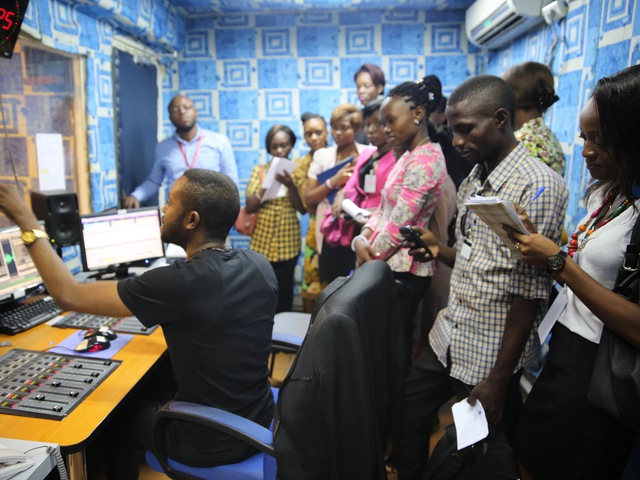
In 2002, Radio Okapi became the first station in the DRC to broadcast across both government and rebel-held territory. Fourteen years later, its director reflects on how the station’s commitment to plurality has contributed to peace-building and reconciliation in the region.

In an interview with with Radio Netherlands in 2004, David Smith – then Chief of Information at the United Nations Organization Mission in the Democratic Republic of the Congo (MONUC) – described a project that would fundamentally change the role of radio in the Democratic Republic of Congo (DRC):

There is no single voice that unites all the Congolese people. This radio project will allow people in rebel held territories to speak to people in government-controlled territories for the first time since the war broke out.

Smith was describing Radio Okapi – a station that had been formed only two years earlier, in 2002, through a joint effort between MONUC (now called MONUSCO) and Swiss NGO Fondation Hirondelle.

The multilingual radio station – created in the final years of the DRC’s bloody, internal conflict that some have described as “Africa’s first world war” – was established with the intent of becoming “the first media outlet to provide national coverage, regardless of political affiliation.”

At the time of its creation, radio was the main instrument through which people accessed news in the DRC, due to its high accessibility and low cost. But the diversity of opinions and information available to citizens at the time was limited. According to Michelle Betz, author of “Radio as Peacebuilder” – an academic case study of Radio Okapi – in early 2002, only nine other radio stations operated in Kinshasa. Up until that point, Betz notes that opposition parties had difficulty gaining access to state-owned broadcasts, and private radio stations often criticised the government less than private newspapers.

Since it started broadcasting, Radio Okapi, the grassroots station that was formed with an aim to “convince people that it’s in their interest to lay down their arms,” has grown to the point where it has approximately 25 million listeners, and employs 191 people, according to Amadou Ba, its director.

This is not to say that free expression and access to information are no longer issues in the Democratic Republic of Congo. Far from it. The DRC is still considered one of the worst countries for freedom of expression, ranked 152nd out of a list of 180 countries in Reporters Without Borders’ 2016 World Press Freedom Index.

IFEX member organization Journaliste en Danger regularly reports on attacks on journalists, arrests of reporters, the shutdown of media outlets, and legislation that hinders access to information. There have even been cases of journalists killed for their reporting.

Nevertheless, Radio Okapi is working to change things. It is the first station to ever broadcast across both government and rebel-held territory, on shortwave and FM. Not only that, the station broadcasts in the five major languages of the region (French, Lingala, Swahili, Tshiluba and Kikongo), making it far more inclusive than stations that only cater to one language or cultural group.

It is now 14 years since the creation of Radio Okapi – and with the war officially over – it’s an ideal opportunity to reflect on how and why this station has become known as “peace radio.” In the Q & A below, Mr. Amadou Ba, Director of Radio Okapi, responded to questions IFEX had about the station’s role in Congolese society, and its plans for the future.

What role does the radio play in keeping people in the DRC informed of news and political developments?

Radio Okapi plays an important role in the processing and flow of information to the population. At the same time, it has become the main source, and acts as a press agency by supplying to newspapers and even other radio stations in the Congolese media landscape. Its website has only gained momentum with over two and a half million visitors per month. Its Facebook page has over half a million friends. Radio Okapi is a way for citizens to access facts, data, ideas and thoughts necessary to exercise their free will. Radio Okapi remains the only medium that allows the vast majority of the population to speak on the big and small events in the local and national life of the country.

What distinguishes Radio Okapi from other stations in DRC?

Radio Okapi is aware of the role it plays in the Congolese people’s national reconciliation process. It is a major force for dialogue throughout the Republic, and supports the people’s efforts to promote the rule of law, and the economic, social, and cultural development of the DRC.

A second defining feature is that Radio Okapi consistently demonstrates high professionalism by seeking information straight from its source. It strives for a more rigorous approach to how information is handled and how contributors are chosen.

Radio Okapi upsets the established order. It gives a voice to everyone, from a government spokesperson to a peasant in the most remote corner of the country.
It gives citizens the opportunity to not only make their needs and their views known, but also gives them a forum for disseminating constructive ideas.

Has the role of Radio Okapi changed since its inception?

Since its creation on February 25th, 2002, Radio Okapi has defined itself as the radio of peace in the DRC. Its purpose stems from the desire to establish and promote a culture of peace. There is a fierce desire to counter media manipulation for military purposes, which thrives in this part of the sub-region – like Radio Television Libre des Milles Collines, in neighbouring Rwanda.

For several years, Radio Okapi has been evolving towards becoming a radio station for development. It carries out a major social function by making an effort to contribute to citizen’s daily lives, to rebuild the country and to establish the rule of law by means of its crucial mission of preserving an impartial, relevant, credible, and verified media.

Who are Radio Okapi’s critics? What are their concerns?

They come mostly from the political class, sometimes from the majority, sometimes from the opposition. It depends on the prevailing political environment. Invariably, Radio Okapi is accused of not giving enough airtime to a particular political party in a country in which there are more than 500 of them.

Fortunately, Radio Okapi has set up a whole system for monitoring newspapers. It hosts a monthly inventory of guests on its shows, like Dialogue Entre Congolais (Dialogue Between Congolese) and the interactive program, Parole Aux Auditeurs (Giving a Voice to the Listeners).

Given that Radio Okapi was created by the UN and the Fondation Hirondelle, is it able to be truly independent?

To my knowledge, no injunctions or specific guidelines have ever been exercised over the editorial line of Radio Okapi.

On the contrary, from its inception, this radio station was conceived as a medium for the Congolese people. It is no coincidence that broadcasting started on February 25th, 2002 – the day talks started between the Congolese at Sun City, in South Africa, in a meeting where effort was made precisely towards pacifying the country, which was thoroughly divided. In this way, Radio Okapi contributed a great deal to the reunification of the DRC.

Over time, this radio station has skillfully been able to bring together debates between the different parts in the conflict into the same public space.

I am tempted to add that 15 years later, there is something which I call the Radio Okapi effect. Rather than stirring up jealousies, Radio Okapi seems to have become the model to be imitated, not being accused of being an “outside agent.” There is a real emulation insofar as much of the media want to do as Radio Okapi does.

How long do you foresee Radio Okapi being around for?

For now, it is difficult to accurately answer your question. What I can tell you is that as long as the United Nations Organization Stabilization Mission in the Democratic Republic of the Congo (MONUSCO) is part of RDC, Radio Okapi will continue to broadcast. Only the United Nations Security Council can predict the end of MONUSCO. Its mandate has been extended until June 30th, 2017. What I should add is that the United Nations seems truly determined to ensure the continuation of Radio Okapi even after the withdrawal of MONUSCO. There are ongoing discussions over this continuation.
Uganda: Radio journalist Beaten to Death

This statement was originally published hrnjuganda.org on June 16, 2016.

Thomas Ssettuba, the Programmes Manager of Radio Ssese, in Kalangala district was on 14th June, 2016 attacked and beaten by locals over a land dispute and later died of head injuries. The incident happened at Banda village Kagulube parish, Mugoye sub-county in Kalangala district where Ssettuba had gone to collect palm nuts from a firm located on 25 acres.

The District Police Commander, Kalangala district, Richard Musisi, told Human Rights Network for Journalists-Uganda that Ssettuba was beaten with sticks and stones by squatters that left him unconscious, after inflicting three severe head injuries.

“On Tuesday, Ssettuba came to me at the station and asked for police protection to go and harvest his palm nuts, but I told him to produce a court order since there was an ongoing court case over the said land. When he went away, he got casual laborers who harvested the nuts. The squatters confronted him at around 8pm local time and engaged in an exchange before they pounced on him, beating him with sticks and stones injuring him severely on the head. We were called to the scene at Banda by our area police…” the DPC told HRNJ-Uganda.

“I rushed to the scene with the District Chairperson, Willy Lugoloobi and Dr. Mugisha. We found him unconscious and brought him to Kalangala Health Center IV from where he got treatment, but died at about 2am before we could transfer him to a referral hospital,” the DPC added.

The DPC said they have arrested ten people including two women suspected to have been involved in the murder. He said, “We are going to search for whoever is implicated in this murder and take them to court.” Mugisha told HRNJ-Uganda.

Some people blamed the police for not giving the journalist protection, well aware of the controversy surrounding the land he went to. Ssettuba, 32, had a land wrangle for four years with squatters over 25 acre palm tree firm he bought. The dispute is before High Court in Masaka.

Ssettuba has left behind a wife and a 7-year old baby. He will be buried today Thursday, June 16, 2016 at Kiryankuyege, Lukaya-Kalungu district.

“It is very sad to lose such a leader in the media industry. We believe that the police should have done more to contain the situation other than letting mob justice rule the day. All the culprits should be arrested and tried in court. Our sincere condolences to the deceased family and the media industry,” said the HRNJ-Uganda National Coordinator, Robert Ssempala

Ghana: MFWA Condemns Threat Against Journalist by DCE

0

The statement was originally published by mfwa.org on June 15, 2016.

The Media Foundation for West Africa (MFWA) has learnt with dismay, reports that the District Chief Executive (DCE) for Awutu Senya West in the Central Region of Ghana, Samuel Abbey Armah, has invoked curses on Adom FM’s reporter, Kofi Agyei over what he (the DCE) describes as biased reportage.

The News Editor of Adom FM, Nii Narku, told the MFWA that Samuel Abbey Armah called Kofi Agyei and threatened him after the station’s broadcast of a story by the reporter in which some taxi drivers in the district denounced the D.C.E and vowed to turn down all future invitations from him to take part in the nation-wide monthly sanitation exercises.

The drivers were reported in the story to have accused the DCE of reneging on his promise to provide them with food and money for participating in a recent clean-up exercise.

In the DCE’s angry reaction which has been reported on Adomonline.com, together with the audio, he is heard saying, “Whatever you do on this earth, you will get your punishment, so you journalists must be careful otherwise you will die like a fowl”.

“You have spoken to the Minister, the chief and me about the issue; that is enough but since you know the taxi drivers will insult me, you went ahead to interview them”, he fumed.

The MFWA believes that the DCE could have expressed his displeasure with the report in a more decorous manner. Invoking curses on the reporter amounts to intimidation and censorship. We therefore call on the Minister of Local Government to call the Chief Executive of the the Awutu Senya West to order.

Uganda: Investigate Break-ins at Human Rights Groups’ Offices

This statement was originally published on hrw.org on June 13, 2016.

Pattern of Attacks Indicates Perpetrators Enjoy Impunity

The Uganda Police Force (UPF) should promptly, thoroughly, and transparently investigate a series of attacks on Ugandan non-governmental organizations and human rights defenders and hold suspects accountable, 31 Ugandan and international human rights groups said today in a letter to the police inspector general. The severity of one of the recent attacks, in which intruders beat a security guard to death, demonstrates the urgency of addressing these attacks, for which no-one has been held responsible.

Between April and May 2016, intruders broke into the offices of at least three groups in Kampala  the Forum for African Women Educationalists (FAWE), the Human Rights Awareness and Promotion Forum (HRAPF), and the Human Rights Network for Journalists-Uganda (HRNJ-Uganda). The break-ins followed more than two dozen previous break-ins at the offices of non-governmental groups since 2012. Although the police inspector general formed a committee of eight officers to investigate the break-ins in July 2014, no one has yet been brought to justice.

“The lack of accountability for attacks on non-governmental organizations has apparently led to an atmosphere in which attackers felt free to kill a security guard, in order to accomplish their aims,” said Maria Burnett, senior Africa researcher at Human Rights Watch. “The Uganda Police Force needs to live up to its obligation to actively investigate these cases and bring those responsible to justice.”

At HRAPF, the assailants beat to death security guard Emmanuel Arituha, ransacked the offices of the director and deputy director, and stole documents and a television screen. They did not, however, take computers, laptops, or other electronic equipment. Colleagues remembered Arituha as “always smiling and very committed to his work.” At the time he was killed, he had been helping to pay his two younger siblings’ school fees.

At FAWE, intruders stole a server, laptop and desktop computers, cameras, and projectors. At HRNJ-Uganda, camera footage shows a visitor apparently providing a dish of food containing sedatives to the security guards, allowing four intruders to search the premises after the guards fell asleep. More than two weeks after the most recent attack, police have not made any arrests.

Organizations whose offices were broken into in 2014 included Human Rights Network-UgandaAnti-Corruption Coalition UgandaUganda Land AllianceAction Group for Health, Human Rights and HIV/AIDS, and Lira NGO Forum. The groups are all known for their work on sensitive subjects – including corruption, land rights, freedom of expression, and the rights of lesbian, gay, bisexual, transgender, and intersex (LGBTI) people – and for criticizing government policies.

In a further attack on the premises of Uganda Land Alliance in July 2015, another security guard, Richard Oketch, was beaten to death. No one has been arrested for his murder.

Each incident has been reported to the police in a timely fashion, but police efforts to investigate and collect evidence such as witness statements, DNA, and CCTV footage have been limited and lacked follow-up. In some cases, the police did not respond to the complaints or, more commonly, provided no substantive update on the status of investigations.

“Human rights defenders already work in a challenging and often repressive environment in Uganda,” said Adrian Jjuuko, executive director of HRAPF. “We’re determined to continue our work on behalf of the Ugandan people, but we need the police to stop disregarding these threats to our property, our physical security, and even our lives.”

As a state party to the African Charter on Human and Peoples’ Rights and the International Covenant on Civil and Political Rights, the Ugandan government should ensure the right to life and the right to liberty and security for all persons, as well as the right to freedom of association, both of which are severely impeded when organizations cannot conduct their work in a safe and secure environment. As set out in the United Nations Declaration on Human Rights Defenders, countries have a duty to protect human rights defenders “against any violence, threats, retaliation, de facto or de jure adverse discrimination, pressure, or any other arbitrary action” as a consequence of their work to uphold human rights.

The organizations that sent the letter to the police inspector general called on him to clarify the steps the police have taken to investigate the most recent break-ins, as well as the previous wave of break-ins in 2014. The letter also asked the inspector general to outline how the police will protect human rights defenders, including HRAPF and others whose offices have been attacked, from further acts of violence.

“The lack of accountability and persistent impunity for attacks on human rights defenders and their offices sends a message that authorities condone and tolerate such attacks,” said Sarah Jackson, Deputy Regional Director for East Africa, the Horn and the Great Lakes at Amnesty International. “Ending impunity is essential to protecting and ensuring a safe and enabling environment for human rights defenders.”

Signatories to the letter include:
Amnesty International, Kenya
Centre for Human Rights – University of Pretoria, South Africa
Chapter Four Uganda, Uganda
COC-Netherlands, Netherlands
Commonwealth Human Rights Initiative, India
Community Development and Child Welfare Initiatives (CODI) Uganda, Uganda
EHAHRDP/Defend Defenders, Uganda
FOKUS – Forum for Women and Development, Norway
Foundation for Human Rights Initiative, Uganda
Freedom House, United States
FRI – The Norwegian Organization for Sexual and Gender Diversity, Norway
Health GAP, United States
Human Dignity Trust, United Kingdom
Human Rights Awareness and Promotion Forum, Uganda
Human Rights Network for Journalists, Uganda
Human Rights Network, Uganda
Human Rights Watch, United States
Icebreakers, Uganda
International Lesbian, Gay, Bisexual, Trans and Intersex Association (ILGA), Switzerland
Initiative for Social and Economic Rights (ISER), Uganda
Legal Aid Service Providers Network-Laspnet, Uganda
NGO Forum, Uganda
Pan Africa ILGA, South Africa
Robert F. Kennedy Human Rights, United States
Sexual Minorities Uganda (SMUG), Uganda
The African Centre for Treatment and Rehabilitation of Torture Victims (ACTV), Uganda
The National Coalition on HRDs, Uganda
Uganda Land Alliance, Uganda
Uganda Network of AIDS Service Organisations (UNASO), Uganda
UHAI-EASHRI, Kenya
Unwanted Witness, Uganda

Please find a letter addressed to General Kale Kayihura here

Two Years On: Gambia Yet to Comply With ECOWAS Court ruling on Murder of Deyda Hydara

Today June 10, 2016, marks two years after the ECOWAS Community Court of Justice found that the Gambian government failed to conduct a proper investigation into the murder of journalist Deyda Hydara.

Hydara who was the editor of The Point newspaper was gunned down in a drive-by shooting by unknown assailants on December 16, 2004 on his way from work. Hydara was also the president of the Gambia Press Union (GPU) and a well-known critic of Gambian President Yahya Jammeh and led advocacy efforts against legislative restrictions on press freedom in The Gambia.

The State’s Response to the Murder

 After Hydara’s murder, the state opened an investigation which was closed in less than a month. No arrests were made and no one was held responsible for the murder. Not only did the state not properly investigate the murder but it also made it a point to restrict and intimidate those who called for proper investigations.

On December 30, 2004, Sam Obi, a Nigerian journalist was arrested and subjected to thorough questioning by officials of the Serious Crime Unit of Gambia Police Force for six hours. Obi’s arrest followed an interview he granted to Radio France International (RFI) about a march organised by the Gambia Press Union (GPU) to protest the murder of Hydara.

On October 13, 2005, the Gambian authorities ordered the management of The Point to discontinue the “Good Morning Mr. President” column started by Deyda Hydara. The then director general of the National Intelligence Agency (NIA), Daba Marrena, told Pap Saine, the then managing editor of The Point that President Jammeh and other government officials were not happy with the column. Following the directive, the column was taken out from the subsequent editions of the newspaper. The management of the newspaper said the authorities threatened to close down the newspaper if it failed to remove the column.

Further, on the first anniversary (December 16, 2005) of Hydara’s murder, officers from the Gambia Police Intervention Force sealed off the site of Hydara’s murder preventing members of the Gambia Press Union (GPU) and foreign journalists from accessing the site. The officers claimed the GPU did not have authority to assemble what they described as a “large crowd.” This resulted in a clash. Ramatoulie Charreh, a female photojournalist who attempted to take pictures of the clash had her camera seized. The officers also grabbed her and folded her hands behind her back. She immediately became unconscious and was rushed to the hospital where she regained consciousness and was later discharged.

Ten months after that, the NIA on October 27, 2006, arrested and questioned Musa Saidykhan, then editor of The Independent newspaper  following an interview he granted to other newspapers on Hydara. Some newspapers, quoted Saidykhan who had then returned from The All Africa Editors Forum in South Africa as saying that then South African President Thabo Mbeki said he would assist the Gambian authorities to resolve Hydara’s murder. The NIA took Saidykhan to their office, interrogated him for many hours after which he was made to write a statement on his trip to South Africa as well as answer questions relating to his profession.

The government silenced media who spoke about Hydara’s murder and also attempted to vilify the slain journalist. In an interview on the state-owned Gambian Radio and Television Stations (GRTS) on June 9, 2009, President Yahya Jammeh quoted the findings of NIA which concluded that Hydara’s gruesome murder was as a “result of personal revenge by a jealous husband, whose wife committed adultery with Hydara.”

Application at ECOWAS Court

On November 23, 2011 Hydara’s family together with the International Federation of Journalists-Africa filed a suit at the ECOWAS Court against The Gambia. In their application, Hydara’s family argued that The Gambia;

  • failed to effectively investigate the murder of journalist Deyda Hydara;
  • caused and tolerated impunity concerning the death of Hydara;
  • violated the right to freedom of expression;
  • failed to provide redress to Hydara’s family, because failing to properly investigate the crime inhibited the family from obtaining compensation.

At the trial, Captain Lamin K. Saine a senior official NIA who was the head of the team that conducted investigations into Hydara’s murder testified as their witness. He defended the NIA investigations and said it was prompt, independent, and that the NIA had included the family. Saine also admitted that the NIA dedicated only 22 days to investigating Hydara’s murder.

On June 10, 2014, the Court found the Gambian government guilty of failing to properly investigate Hydara’s murder. The Court noted that the NIA investigations did not carry out any ballistic, bullets and or weapon tests as part of the investigation. It said by failing to conduct proper investigations, government allowed impunity to thrive in the country. The Court consequently ordered the Gambian government to pay $50,000 in damages Hydara’s family and $10,000 as legal costs.

Two Years After Court Ruling

 The Gambia is yet to comply with the ruling of the Court just as it has failed to comply with the two earlier rulings of the Court – the cases of Chief Ebrimah Maneh and Musa Saidykhan. Meanwhile the freedom of expression condition in the country has worsened.

The MFWA again appeals to the ECOWAS to ensure that The Gambia complies with the rulings of the Court and ensure justice for Hydara and his family.

Court Order: Defendant to be Served through Newspapers over Assault Case

This statement was originally published on hrnjuganda.org on June 8, 2016.

Court at Masaka has granted permission to serve the ruling National Resistance Movement (NRM) party official through News Papers, to respond to a case where he was sued for assaulting a journalist in May 2015. Rogers Mulindwa, the Party Electoral Commission spokesperson was sued in March 2016 by a journalist, Eddie Bindhe of Uganda Radio Network (URN), for assault and breaking his eye glasses.

Bindhe through his lawyer Kalule Fredrick attempted to notify Mulindwa over the matter as required by law but all attempts to get him to sign the documents failed. Bindhe’s lawyer today, told court presided over by Masaka Chief Magistrate Samuel Munobe, that attempts to serve Mulindwa with court summons to file a defence had proved futile. He requested court to grant Bindhe permission to serve Mulindwa through newspapers. “The application is granted and summons therefore issued for service in Newspapers,” the Chief Magistrate Munobe ruled.

Under the Civil Procedure Rules, where summons cannot be served in person, court can grant permission to notify a party by substituted service. HRNJ-Uganda legal officer, Diana Nandudu, said the summons will be placed in the newspapers to enable Mulindwa to view and act upon them.

Bindhe alleges that Rogers Mulindwa on 12th May 2015 assaulted and dragged him by the neck while he was covering the launch of the NRM members’ registration exercise in Masaka, officiated by the party Secretary General Justine Kasule Lumumba. In the process Bindhe’s eye glasses were broken.

“Ruling party officials are not above the law, they must respect court orders. HRNJ-Uganda will ensure that there is compliance with court process and violators of freedom of expression must face justice” said Robert Ssempala the National Coordinator.

Access to Information campaigners appeal against downgrading of World Bank’s Freedom of Information Programme

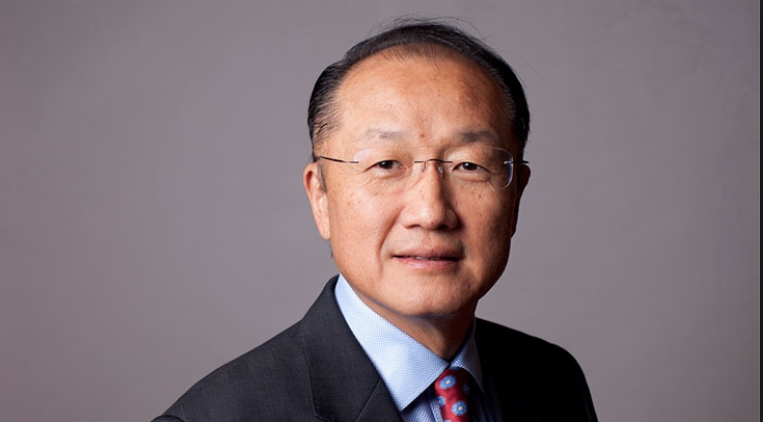
The African Platform on Access to Information (APAI) Working Group and other civil society organisations working on freedom of information around the globe have written to World Bank President Jim Yong Kim to express their concern about reports that the World Bank has significantly downgraded its capacity to pursue a global right to information agenda.

The APAI Working Group and its campaign partners have expressed fears that without access to information on donor and government funded programmes, accountability to citizens will be impossible, and corruption and the burden of loans on the poor will escalate. This will in turn undermine the World Bank’s stated goals of ending poverty.

Please find here the letter addressed to President Kim.


The Working Group of the Campaign for an African Platform on Access to Information is a network of civil society organisations that are working on the promotion of access to information in Africa. The APAI Working Group has successfully lobbied the Unesco General Conference to proclaim September 28 as the International Day for Universal Access to Information.


Enquiries:
APAI Campaign Secretariat

Private Bag 13386
Windhoek, Namibia
Tel: +264 61 232975
Fax: +264 61 248016
Email: [email protected]