Tuesday, May 12, 2026
Home Blog Page 5

AFIC appeals to ACHPR to pass resolution urging all members to urging all members to adopt respective national ATI laws

0

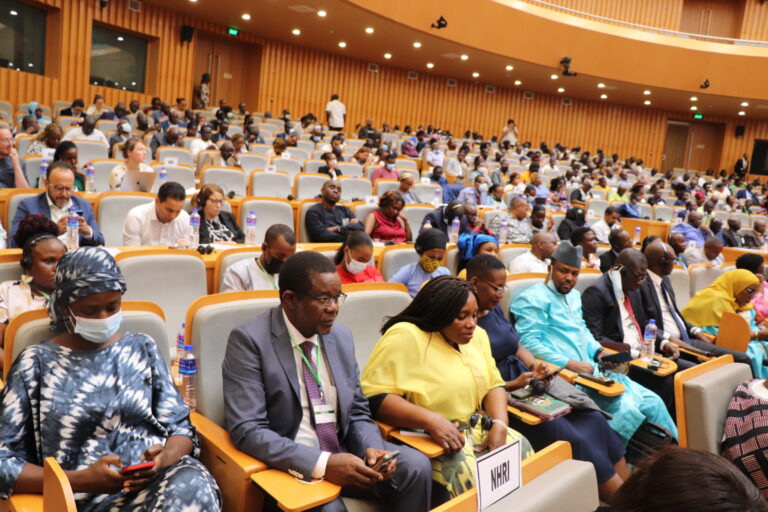
The African Freedom of Information Center (AFIC) has called on the African Commission on Human and Human Rights (ACHPR) to undertake promotional visits to countries yet to pass Access to Information Laws and encourage them to adopt ATI laws. AFIC also urged the Commission to request the Heads of State Summit of the African Union to adopt a resolution urging all members to adopt respective national access to information laws within the next one year.

Kindly read AFIC’s statement below.


Statement in Support of the Special Mandate on Freedom of Expression and Access to Information in Africa delivered by Mr Gilbert Sendugwa


Arusha October 2023

Hon Chairperson, Distinguished Hon Commissioners, State delegates, Ladies and Gentlemen,

Africa Freedom of Information Centre (AFIC) and its membership of 51 civil society organisations in 27 African countries, have the pleasure to commend the Special Rapporteur on Freedom of Expression and Access to Information in Africa for her leadership and excellent collaboration in the advancement of the right to information in Africa.

 Hon Chairperson;

The right to information is guaranteed under Article 9 of the African Charter on Human and Peoples’ Rights andis also recognised by the African Union in other five treaties including the African Charter on Democracy, Elections and Governance; the African Union Convention on Preventing and Combating Corruption; the African Charter on Values and Principles of Public Service and Administration; the African Union Youth Charter and the African Charter on Statistics.

We commend the Special Rapporteur on freedom of expression and access to information in Africa for her leadership in advocating for the ratification, domestication and effective implementation of these important treaties that are central to Africa’s integration and development agenda.

In November 2019 the African Commission on Human and Peoples’ Rights adopted the revised Declaration of Principles on Freedom of Expression and Access to Information in Africa which in Principle 26 states that, the right of access to information shall be guaranteed by law….”  

Earlier on in 2015, all members of the United Nations including all states parties to the African Charter on Human and Peoples’ Rights adopted by consensus, the Sustainable Development Goals (SDG) framework in which they committed under Goal 16.10 “to ensure public access to information and protect fundamental freedoms, in accordance with national legislation and international agreements

Access to information is a fundamental human right, essential for the realisation of all other rights. It is also essential for the achievement of all SDGs as well as the African Union Agenda 2063. Not long ago, the world was faced with the Covid-19 pandemic where it was demonstrated that in many instances access to information can be the difference between life and death. Whether it is in facilitating prevention of the spread of the disease, effective management of patients or building support and effective reintegration of healed patients into their communities.

Access to Information is a critical for entrenching democratic governance and a vaccine to coup d’états.   In Africa today we are witnessing a resurgence of military coups, many taking place after election and electoral processes characterised by lack of information, misinformation and disinformation that discredit the process,undermine public trust and legitimacy of outcomes, creating conditions for exploitation by the militaries.

Hon Chairperson, Commissioners,

It is deeply concerning that 42 years after the adoption of the African Charter on Human and Peoples’ Rights, 27 African countries are yet to adopt national access to information laws to give effect to Article 9 of the Charter. These include Burundi, Cameroon, Central African Republic, Chad, Comoros, Democratic Republic of Congo, Republic of Congo, Djibouti, Egypt, Equatorial Guinea, Eritrea, Eswatini, Gabon, Guinea Bissau, Lesotho, Libya, Madagascar, Mali, Mauritania, Mauritius, Sahrawi Arab Democratic Republic, Sao Tome and Principe, Senegal and Somalia.

Chairperson, distinguished Commissioners;

Only seven years are remaining for the 2030 SDG framework to elapse. We therefore call upon the African Commission on Human and Peoples’ Rights to:

  1. Through urgent letters of appeal and other channels, urge the above listed countries to urgently adopt access to information laws taking guidance from the Model on Access to Information adopted by this Commission in the year 2013.
  2. Undertake promotional visits to these and encourage them to adopt ATI laws soonest
  3. Through the Commission’s next report request the Heads of State Summit of the African Union to adopt a resolution urging all members to adopt respective national access to information laws within the next one year.

Thank you for your kind attention
MISA calls on ACHPR to urge governments in Southern Africa to domesticate UN Plan of Action for Safety of Journalists

0
The Media Institute for Southern Africa on October 24 made a statement at the on-going 77th Ordinary Session of the African Commission on human and People’s Rights. The statement presented by Dr Tabani Moyo highlighted freedom of expression issues in Southern Africa and made recommendations on how the situation can be improved.
Kindly read the statement below.
Statement Presented by Dr Tabani Moyo (MISA Regional Director)
In 2022, we were optimistic that Southern Africa had turned the corner regarding attacks against journalists. However, we were jolted back to reality by the death of Ralikonelo Joki, the Lesotho broadcaster, who was shot and killed as he drove out of his work of employment. Before his death, Joki received death threats through social media platforms.

An age of democratic backsliding

Chairperson, Honourable Commissioners, state delegates, ladies and gentlemen, the Media Institute of Southern Africa MISA presents this statement during the 77th Session of the African Commission on Human and Peoples’ Rights (ACHPR).

This session is critical as we commemorate the International Day to End Impunity for Crimes against journalists. Last year, we commemorated the 10th anniversary of the United Nations Action Plan on the Safety of Journalists. Instead of celebrating progress over the past decade, we are witnessing democratic backsliding across the globe in general and in Southern Africa in particular, which is characterised by shrinking civil space.

● Shrinking civil space

Over the past few years, we have witnessed an increase in the number of countries that have introduced legislation that unimaginably constricts civil space. Southern African countries have claimed that the civil society laws they have introduced are meant to ensure these nations comply with the Financial Action Task Force (FATF) recommendations. The FATF recommendations, particularly Recommendation 8, which focuses on NGOs and the potential use of NGOs as vehicles for money laundering and terrorism financing, have become an albatross around the necks of civil society in Southern Africa. For example, Angola and Mozambique are in the process of enacting NGO laws. Malawi and Tanzania have enacted similar legislation, while Zimbabwe’s PVO Amendment Bill has been returned to the legislature.

We believe there is a need to engage the FATF on the far-reaching consequences of this legislation, and the ACHPR could be the right conduit for such a discussion. While the recommendation was well-meaning, the way it is implemented could have far-reaching consequences for civil society to play its watchdog role effectively, which could affect the quality of democracy. Instead of engaging individual governments on an ad hoc basis on these laws, the ACHPR could be the right platform to engage the continent collectively with the FATF to provide clarity and prevent democratic backsliding.

● Impunity for crimes against journalists

In 2022, we were optimistic that Southern Africa had turned the corner regarding attacks against journalists. However, we were jolted back to reality by the death of Ralikonelo Joki, the Lesotho broadcaster, who was shot and killed as he drove out of his work of employment. Before his death, Joki received death threats through social media platforms. The threats went uninvestigated. In the aftermath of Joki’s death, other journalists received similar death threats on social media. These were not investigated as well.

On March 28 this year, Blandina Sembu, a presenter with Tanzania’s ITV and Radio One (local stations), was found dead and her body thrown by the roadside. Her death remains unresolved. I want to point out that these deaths follow the enforced disappearance of the Mozambican journalist Ibrahimo Mbaruco, who has been missing for over three years. There is a lack of transparency in investigations over his disappearance. Furthermore, the Tanzanian journalist Azory Gwanda is yet to be accounted for several years after he went missing.

Impunity for crimes against journalists breeds self-censorship from media workers, who will resort to self-preservation and, ultimately, the death of investigative journalism. Where there is no investigative journalism, authorities are not held to account, leading to the death of democracy. This is the democratic backsliding alluded to earlier.

● Cybersecurity laws and surveillance

Artificial Intelligence’s growth in Southern Africa adds a new layer of uncertainty for an already vulnerable media fraternity. Surveillance is a massive threat to freedom of expression in the region. Governments must be more transparent in deploying surveillance equipment and the information they seek. As I have presented on this platform, a report released three years ago named Botswana, Zambia and Zimbabwe as the countries deployed surveillance equipment from the Israeli firm Circles. None of these countries have responded to the report, with this issue not even being discussed in the legislatures of any of these countries.

In countries with pervasive surveillance, sources of journalistic information and whistleblowers are too afraid to communicate with journalists. When whistleblowers cannot shine the light on dark spots because they fear surveillance, you know that democratic backsliding is in full motion and democracy is under threat.

Without proper safeguards for human rights, cyber security laws can be misused to stifle freedom of expression. Protecting human rights ensures that individuals can express their thoughts and opinions online without unwarranted interference or censorship. In particular, all laws must protect journalists’ work and sources.

In cases where governments are not transparent with how they use surveillance equipment, there is every reason to worry that deploying unchecked AI could be detrimental to freedom of expression and the media. This is because AI can be used for propaganda, misinformation, and disinformation. Information disorders are particularly worrisome because they can potentially affect public participation and citizen engagement.

Surveillance has a gendered aspect to it as well. This is recognised in the ACHPR Resolution 522 on protecting Women Against Digital Violence in Africa. Particularly so on the resolutions to undertake measures to safeguard women journalists from digital violence, including gender-sensitive media literacy and digital security training; and to repeal vague and overly wide laws on surveillance as they contribute to the existing vulnerability of female journalists.

• Elections and Expression

2023 – 2024 will be recorded as heavy on the region, with ten elections in 24 months. Elections, by their nature, due to the levels of contestation, exert pressure on expression and the media in the region. In 2024, we have a mixed bag of local, provincial, constituency and presidential elections in South Africa, Mozambique, Mauritius, Madagascar (2nd round), Botswana, Namibia and Malawi

Historically, the ACHPR, through its special mechanisms, contributed immensely as part of the shield upon which the peoples of the continent and region rely on as they escalate their struggles to promote and defend this centre-pivot right, upon which the rest of the enjoyment of the rights rests on. MISA stands ready to support the commission’s work in keeping the countries headed to elections in check.

MISA remains open to constructive engagement with the governments of Southern Africa through the Southern African Development Community secretariat.

We, however, urge the ACHPR to encourage the Governments of SADC to:

● Domesticate the United Nations Plan of Action for the Safety of Journalists so that the safety of journalists is guaranteed by law
● Ensure that the cybersecurity regulation is informed by the ACHPR Declaration on Freedom of Expression and Access to Information’s revised principles, which recognise the internet as a right.
● Domesticate the ACHPR Resolution 522 so that female journalists are protected online.
● Be transparent in how surveillance is used, and this should always be with judicial oversight.

Thank you!

The statement by MISA Regional Secretariat Director, Dr Tabani Moyo, was presented at the 77th Ordinary session of the African Commission of Human and People’s Rights in collaboration with the African Freedom of Expression Exchange (AFEX) on the 25th of October 2023, Arusha, Tanzania.

CIPESA, others, highlight effects of disinformation on the digital civic space in Africa

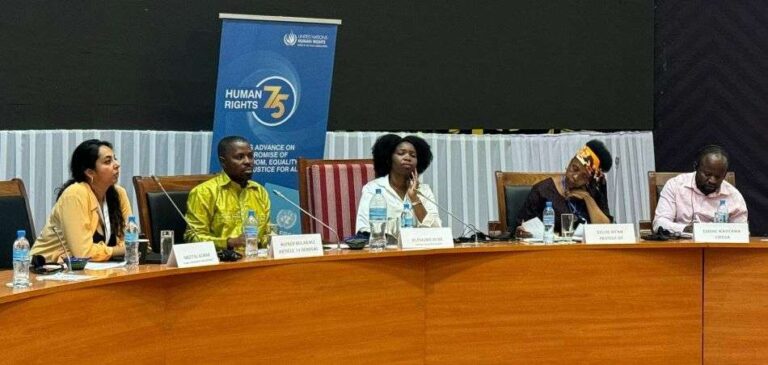
The effects of disinformation on the digital civic space have been put in the spotlight at the 77th Ordinary session of the African Commission on Human and Peoples Rights held in Arusha, Tanzania on October 16-18, 2023.

In a  panel session titled “Promoting rights-respecting government responses to disinformation in Sub-Saharan Africa,” speakers explored how disinformation affects online rights and freedoms including freedom of expression, access to information, freedom of assembly and association and participation especially in electoral democracy. Speakers at the session, which was part of the Non-Government Organisations (NGOs) Forum, were drawn from Global Partners Digital, the Collaboration on International ICT Policy for East and Southern Africa (CIPESA), ARTICLE 19 Senegal/West Africa, PROTEGE QV of Cameroon, and the Centre for Human Rights at the University of Pretoria.

Hlengiwe Dube of the Centre for Human Rights explored the general terrain of disinformation in Africa, including the steadily evolving information disorder. She also highlighted the LEXOTA disinformation tracker created by a project led by Global Partners Digital with several African partners,  which was intended to ensure that limitations and controls on freedom of expression and access to information, as well as assembly and association, are minimised.

Sheetal Kumar, the Head of Engagement and Advocacy at Global Partners Digital, said the tracker is an essential tool for exploring how laws and government actions against disinformation impact freedom of expression across Sub-Saharan Africa.  The tracker is an interactive platform that allows for real time checking and comparison of laws and actions taken in 44 out of 55 African countries in response to disinformation. It provides a reference point for developments and trends.

Edrine Wanyama, a Legal Officer at CIPESA, observed that disinformation has been widely employed by governments in Burkina Faso, Cameroon, Ethiopia, Kenya, Nigeria, South Africa, Tanzania, Uganda  as a excuse to enact laws and adopt regulations and  policies that to curtail the digital civic space. As a result, access to the internet, access to information, freedom of expression, assembly and association and citizen participation in electoral democracy have been widely limited. Wanyama said that, as noted in the CIPESA research on Disinformation Pathways and Effects: Case Studies from Five African Countries, internet shutdowns during elections such as in Tanzania and Uganda were partly justified as a measure against disinformation, but led to questions about the credibility of the elections.

While discussing the advocacy initiatives undertaken by the project, Sylvie Siyam, director at Protege QV, noted that during the Covid-19 pandemic, some governments introduced measures to combat disinformation which contravene regional and international human rights standards. She said some of those measures remain in place and continue to be used to curtail freedom of expression, access to information, assembly and association.

She called for multi-stakeholder engagement especially involving CSOs, parliaments, and relevant government entities to pursue progressive policy reforms such as was witnessed by the adoption of the access to information law in Zimbabwe.

Most of the strategies employed by states to combat disinformation largely interfere with civil liberties. Laws and policies are often utilised to limit the space within which key players such as law dons, political dissidents, human rights defenders, journalists and online activists operate. The pinch has been widely felt through increased arrests, denial of fair trial rights, denial of participation in electoral democracy, censorship of the press, curtailment of freedom of expression and access to information and limiting enjoyment of economic freedoms.

Alfred Bulakali, Deputy Regional Director of ARTICLE 19 Senegal/West Africa, observed that disinformation endangers  civic space given the regressive measures that states often take, such as the enactment and adoption of retrogressive legislation. He called on states to use human rights-based approaches when responding to disinformation as a means to safeguarding civil liberties. Bulakali also stressed the need for capacity building of CSOs to effectively challenge regressive and draconian laws.

The five partners provided the following joint recommendations for inclusion in the NGOs Statement to the African Commission on Human and Peoples’ Rights (ACHPR) 77th Ordinary Session.

Recommendations for States:

  1. Review and revise disinformation laws to align with international and regional human rights law and standards, eliminating general prohibitions on vague and ambiguous information dissemination. Ensure they have a narrow scope, adequate safeguards, and cannot be weaponised against journalists and human rights defenders. Review punitive measures, repeal laws criminalising sedition and defamation in favour of civil sanctions, and ensure compliance with international human rights laws.
  2. Develop and implement laws that combat disinformation openly, inclusively, and transparently, consulting with stakeholders. Train relevant authorities on regulations without infringing human rights, clearly communicate penalties, and build safeguards against misuse.
  3. Build the capacity of relevant actors to address disinformation in compliance with international standards. This includes addressing disinformation with multi-stakeholder and multi-disciplinary solutions, including media literacy training, empowering fact-checkers, journalists, legislators, and regulators, taking into account vulnerable and marginalised groups, in compliance with international standards.
  4. Conduct awareness-raising programmes on the information disorder.
  5. Desist from resorting to disproportionate measures that violate human rights like internet shutdowns or website blockages in response to disinformation.
  6. Enact and enforce access to information laws with proactive disclosure of credible and accurate information.
  7. Create a conducive environment that promotes healthy information ecosystems and ensures that citizens have access to diverse, reliable information sources, either proactively or upon request, in line with international human rights standards on access to information.
  8. Fully enforce decisions and frameworks on decriminalisation of defamation and press libel, restrain from using specific laws to repress speech and media for information disclosure under vague disposals relating to false news.
  9. Integrate Information and Media Literacy into the curricula of journalism training centres and schools.
  10. Train law enforcement actors on public information disclosure, the protection of freedom of expression in their approach to tackling disinformation and the prevention of public and political propaganda and information manipulation.

Recommendations for Civil Society Organisations:

  1. Monitor, document, and raise awareness of illegitimate detentions or imprisonments related to disinformation charges.
  2. Strengthen the advocacy and capacity building initiatives that support legal reforms for human rights legislations and policies tackling disinformation.
  3. Include digital and media literacy in advocacy initiatives.

Recommendations for Regional and International Bodies:

  1. Issue clear guidance on how states should develop and enforce disinformation legislation in a rights-respecting manner, including through open, inclusive, and transparent policy processes and multi-stakeholder consultations.
  2. Denounce the use of disinformation laws for political purposes or to restrict the work of journalists and legitimate actors.
  3. Integrate information disorder as a priority in human rights, rule of law, democracy and governance frameworks under development cooperation (bilateral and multilateral cooperation) and access to information as a tool to achieve accountability on public governance and the Sustainable Development Agenda.

Additional Recommendations to the African Commission Special Rapporteur on Freedom of Expression and Access to Information and other African Commission Special Mechanisms:

  1. Collaborate with stakeholders to address the information disorder in Africa.
  2. Promote the 2019 Declaration of Principles on Freedom of Expression and Access to Information in Africa for addressing the information disorder.
  3. Continuously monitor and document disinformation trends and expand the normative framework to combat disinformation.
  4. Organise country visits in member countries where disinformation laws and press libels are used to restrict speech and citizen engagement.

AFEX condemns the arrest of reporter Anicet Moleka

The prolonged conflict in the Democratic Republic of Congo  (DRC) has translated into a nightmare for journalists and their work. The environment has sabotaged the safety of journalists with mass arrests, detainment and assassinations on the grounds of defamation and distribution of false information perpetrated against them.

On October 6, 2023, the mayor of the northwestern Congolese city, Lisala, Desi Koyo, issued an order for the indefinite suspension of radio broadcasts by Radio Top Lisala.

According to media reports, the radio station had disregarded an earlier order in the month of August by the mayor to suspend broadcast on the basis of defamation, immoral and insulting language on the current affairs program, Tic Tac, which undermined the dignity of the Mongala Provincial authorities.

In the press law introduced in March 2023, it is the sole prerogative of the Superior Council of Audiovisual and Communication to issue sanctions against media outlets and journalists for professional misconduct and as a result the mayor does not have the legal mandate to suspend journalists from reporting.

The media in the country have expressed worry over the fact that the criminal defamation complaint leveled against Moleka by the Mayor could attract up to a five-year jail term.

Moleka has denied claims of insult against authorities and told the media that he denounced the arbitrary arrest of local people and the slow implementation of President Tshisikedi’s flagship national program to combat poverty and inequality. The station’s general director, Ernest Ngasa also refuted claims of insult against authorities in the province to the media.

AFEX condemns the illegal arrests, detention and killing of journalists in DR Congo. We call on the Government of DR Congo to release illegally detained journalists and improve press laws which removes restriction to the movement and freedoms of the press.

Finally, we call on the Government to combat impunity against journalist from the past and the present.

AFEX and IPI to host side event at 77th Session of ACHPR

0

The African Freedom of Expression Exchange and the International Press Institute will on October 19, host a side event at the 77th Session of the African Commission on Human and People’s Rights (ACHPR).

The event, titled “Addressing online threats towards female journalists in Africa: Gaps and opportunities” will bring together seasoned journalists and activists to discuss threats against female journalist and how to support and protect female journalists in the face of online attacks.

Online attacks and smear campaigns targeting journalists, in particular female journalists,  in retaliation for their journalistic work, represent a growing threat to safety as well as the credibility and trust that independent media enjoys. These online threats not only generate self-censorship among journalists who are targeted but can also result in physical harm.

In recognition of the recently commemorated International Day for Universal Access to Information under the theme “the importance of online spaces for access to information” this side event will unpack online attacks that limit female journalists from doing their jobs and providing information to the public.

This meeting will bring together civil society and media organizations at the sidelines of the NGO Forum ahead of the ACHPR session to reflect on and strengthen approaches towards the online safety of female journalists.

Speakers

● Obioma Okonkwo, Head of Legal Department, Media Rights Agenda

● Rebekah Awuah, Senior Reporter, The Fourth Estate project, Media Foundation for West Africa

● Gilbert Sendungwa, Executive Director, Africa Freedom of Information Centre

● Jane Godia, Director for Africa, World Association of News Publishers (WAN-IFRA)

Moderator:  Nompilo Simanje, Africa Advocacy and Partnerships Lead, International Press Institute


For further information, kindly contact, Nompilo Simanje, [email protected].

Journalists assaulted and arrested for covering opposition politician Bobi Wine

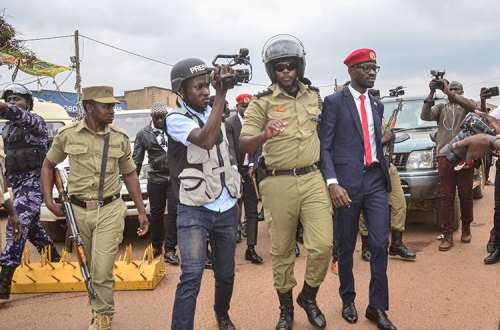
More than a dozen journalists were arrested with several of them assaulted and their equipment confiscated by Ugandan security personnel during the coverage of the arrest of Robert Kyagulanyi aka Bobi Wine at Entebbe International Airport.

The arrival of Bobi Wine at Entebbe International Airport at 10 am was expected to commence the ‘One million march’ to Kampala City but was disrupted by his arrest by security personnel who drove him home and put him under house arrest.

Bobi Wine has become a staunch opponent to the long-serving President, Yoweri Museveni. In 2021, he competed against the president in the Ugandan General Elections. Political campaigns held before the January 2021 election were marred with widespread violence and human rights abuses, including killings by security forces, who also arrested and beat up opposition supporters and journalists. At a rally in Luuka, at least 54 people were killed after the arrest of Bobi Wine.

A statement by AFEX Member the Human Rights Network for Journalists, Uganda, has revealed that the arrested journalists had their statements taken even though the charges against them remained unclear.

The Chairperson of the Uganda Human Rights Commission (UHRC), Mariam Wangadya has urged the journalists who have since been released from the Entebbe Police Station, to lodge a human rights violation complaint and the Commission will investigate.

AFEX calls on the security forces of Uganda to drop all unknown charges against journalists to enable them go about their professional duties without fear or favor.

GPU condemns troubling remarks of Gambian President on press freedom and democracy

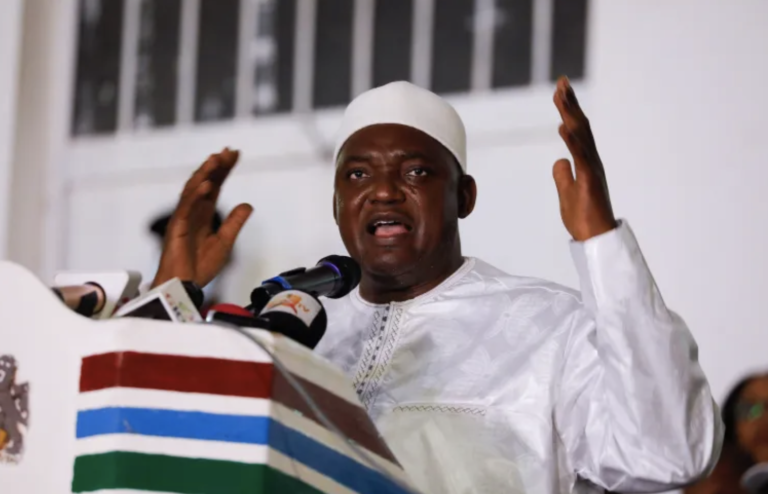
Gambia’s President, Adama Barrow, has made a series of remarks that directly threaten the state of press freedom, freedom of expression and the country’s fledgling democracy.

On 29 September, while opening his National People’s Party (NPP) bureau in Bansang, Gambia’s Central River Region, South, President Barrow said: “If there was no democracy, Kerr Fatou wouldn’t have existed. If there was no democracy, Mengbe Kering ‘Radio’ would not exist in The Gambia. And all radio stations that criticize the government would not exist either.”

Mengbe Kering is not a radio station, it is an online TV platform which hosts a special current affairs talk show by the same name and other programmes. It now forms part of the Home Digital FM and regularly broadcast on Facebook.

The two media platforms have since condemned the president’s remarks as a “dangerous attack”. “The president’s intention was to assault our integrity, demonise our professionalism and use that vitriolic rhetoric to spark public hostility towards me and my establishment,” Pa Modou Bojang, Mengbe Kering founder and owner of Home Digital FM, said in a statement.

“When a government singles out specific media outlets for intimidation or suppression, it sets a perilous precedent that endangers the essential role of the press as a bulwark against governmental overreach,” Fatou Touray, proprietor of Kerr Fatou, also said in a statement.

While inaugurating an another NPP bureau in Wassu, Central River Region, North, President Barrow said that “the state of democracy in the country had reached an excessive point, with people freely expressing their opinions without accountability.” “I will talk to the Inspector General of Police, those who want to burn this country will be arrested and detained,” he said.

On October 3, while inaugurating another NPP bureau in Jarra Soma, Lower River Region, President Barrow called the leading opposition, the United Democratic Party, “the biggest threat to national security” and threaten to arrest radio station owners and rearrest individuals granted bail by the courts.

“However, I want to emphasize that no one will be allowed to insult others in the Gambia without facing consequences. Even on radio, if someone calls in and engages in insulting behavior, we will take appropriate action, including arresting the owner of the radio station. Moreover, on social media, we will put an end to the practice of insulting others. Even if individuals are released on bail by a judge, we will re-arrest them,” he is quoted as saying in Mandinka, a local dialect.

“These threats directed at the media are totally unacceptable – such remarks from President Barrow have the effect of inciting his supporters and party militants and the police against the media,” GPU Secretary General, Modou S. Joof, said.

“Barrow had in the past accused the Gambian media of bias, which was followed by physical attacks on journalists by his supporters and State House staff with impunity. These included attacks on journalists working for Kerr Fatou in the buildup to the 2021 presidential election and the arrests of four journalists after police raided radio stations and the subsequent arbitrary closure of Home Digital FM and King FM for a month in 2020.”

Barrow’s government has made very little progress on the implementation of the Truth, Reconciliation and Reparations Commission (TRRC) recommendations on attacks on the media, upholding press freedom, the rule of law and media law reforms. The promise of greater freedoms, the protection of journalists, and media law reforms have yet to be fulfilled, six years into the country’s transitional justice process.

“Giving voices to those who hold the government to account is fundamental to the media’s watchdog role which is guaranteed by the Gambian Constitution,” GPU President, Muhammed S. Bah, said. “The GPU calls on President Barrow to give due consideration and observance of the recommendations of the TRRC as they relate to press freedom, freedom of expression and the safety of journalists.”

  • The GPU is reminding the President to uphold his responsibility to protect press freedom and freedom of expression as guaranteed by the laws of the Gambia and relevant international legal instruments to which the Gambia is a signatory.
  • To ensure the country recovers from the brutal past, the government must be committed to ending impunity and intimidation of journalists and create a safer environment for the media to carry out its constitutional mandate.
  • The GPU also urges the President to take concrete measures to ensure journalists covering government and his party’s events are free from harassment, intimidation, and physical and verbal attacks.
  • President Barrow’s government must be committed to end impunity for crimes against journalists, and also stop attacks and the harassment of human rights defenders and political activists for expressing their opinions and criticisms of the government and its leadership.

Report: The state of internet freedom in Africa 2023

0

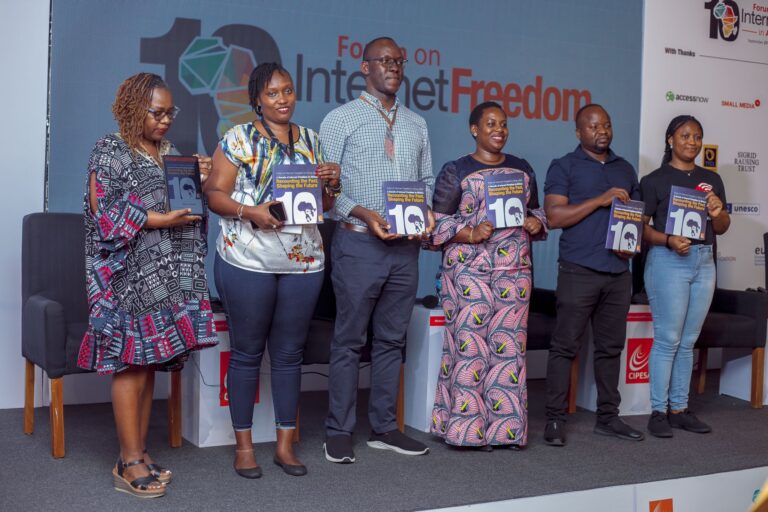
The Collaboration on International ICT Policy for East and Southern Africa (CIPESA) is proud to announce the launch of its 2023 edition of the State of Internet Freedom in Africa report titled, ‘A Decade of Internet Freedom in Africa: Recounting the Past, Shaping the Future of Internet Freedom in Africa’. This year marks a decade since the first State of Internet Freedom in Africa report was produced. Similarly, it marks a decade of the Forum on Internet Freedom in Africa (FIFAfrica) which has since 2014 served as the platform for the launch of every State of Internet Freedom in Africa report.

This special edition honours the efforts of various state and non-state actors in the promotion of internet freedom in Africa. The report takes a deep dive into the dynamic landscape of internet freedom on the African continent and offers contextual information and evidence to inform ICT policymaking and practice, creates awareness on internet freedom issues on the continent, and shapes conversations by digital rights actors across the continent.

Through a series of essays, authors in this special issue of the report reflect on the past 10 years on the state of Internet freedom in Africa, exploring various thematic issues around digital rights, including surveillance, privacy, censorship, disinformation, infrastructure, access, advocacy, online safety, internet shutdowns, among others. Authors featured in the report include, Admire Mare, Amanda Manyame, Blaise Pascal Andzongo Menyeng, Rima Rouibi, Victor Kapiyo, Felicia Anthonio. Richard Ngamita, Nanjala Nyabola, Professor Bitange Ndemo, Paul Kimumwe, and Edrine Wanyama.

The report maps the way ahead for digital rights in Africa and the role that different stakeholders need to play to realise the Digital Transformation Strategy for Africa and Declaration 15 of the 2030 Agenda for Sustainable Development on leveraging digital technologies to accelerate human progress, bridge the digital divide, and develop knowledge societies.

The report was unveiled at the closing ceremony of the FIFAfrica which this year was held in Dar es Salaam, Tanzania.

Find the full report here.

AFEX Members in Nigeria Call on the Government to Facilitate Internet Access for all Citizens

0

LAGOS, September 28, 2023: Three freedom of expression and media development organizations today issued a joint call on Federal and State Governments to take urgent measures to facilitate access to the Internet for all Nigerians in accordance with the government’s international obligations. They stressed that access to the internet is no longer a matter of mere convenience but a fundamental prerequisite for full citizenship and participation in modern society.

In a joint statement signed by Dr. Akin Akingbulu, Executive Director of the Centre for Media and Society (CEMESO); Mr. Lanre Arogundade, Executive Director of the International Press Centre (IPC); and Mr. Edetaen Ojo, Executive Director of Media Rights Agenda (MRA) in commemoration of this year’s International Day for Universal Access to Information (IDUAI), the organizations urged the government to take immediate and comprehensive action to bridge the digital divide by exploring innovative solutions to provide universal and affordable internet connectivity to all citizens, regardless of their location or economic status.

According to them, universal access to the internet has become imperative in the digital age “with many countries in Africa and elsewhere in the world already providing or ensuring high quality Internet connectivity for all their citizens free of charge”, which makes it “unacceptable that millions of Nigerians continue to wallow in digital wilderness”.

The organizations are the Nigerian members of the International Freedom of Expression Exchange (IFEX), a global network of freedom of expression organizations, and its continental network, the African Freedom of Expression Exchange (AFEX), and are collaborating under the banner of the Partnership for Media and Democracy (PAMED).

They recalled in their joint statement that Nigeria was a co-sponsor of the United Nations Human Rights Council resolution A/HRC/20/L.13 of July 5, 2012, wherein the global human rights body called on “all States to promote and facilitate access to the Internet”.

They argued that having worked with a handful of other countries, namely the United States, Brazil, Sweden, Turkey and Tunisia, to initiate and propose the idea to the world for all States to facilitate access to the Internet for their citizens, it is ironic and reflects negatively on Nigeria that more than 11 years after the resolution was adopted, it has no policy or plan in place for the realization of the goal for its own citizens.

The organizations also cited the provisions of Paragraph 37 of the Declaration of Principles on Freedom of Expression and Access to Information in Africa, adopted by the African Commission on Human and Peoples’ Rights, which imposes a mandatory obligation on member States of the African Union to, “in cooperation with all relevant stakeholders, adopt laws, policies and other measures to provide universal, equitable, affordable and meaningful access to the internet without discrimination.”

The organizations noted that while a significant portion of Nigeria’s population enjoys the benefits of the online world, there remains a sizable segment of the society that is excluded, marginalized, and disadvantaged due to their lack of access to the internet, arguing that such exclusion raises critical questions about the status of such people as citizens in the digital age where many public services and other benefits are now available only to those who are online.

Observing that this year’s celebration of the International Day for Universal Access to Information is focusing on the importance of the online space for Access to Information, they argued that the digital age has transformed the way we live, learn, work, and communicate and that access to the Internet had become a necessary means for the exercise of the rights to freedom of expression, access to information and other human rights online.

The organizations insisted that those who are currently not online are being unjustifiably denied their full citizenship rights and benefits, including access to critical public services and other benefits that exist online in the digital age and urged Federal and State Governments to take advantage of this year’s celebration of the international right to information Day to commit themselves to redressing this undesirable reality.

They also called on Federal and State governments to take urgent steps to boost public trust and confidence in the internet, including by putting an end to attacks on journalists, bloggers and other citizens for expressing themselves online, describing such practices as a violation of the right to freedom of expression as well as the spirit of the 2012 UN Human Rights Council resolution co-sponsored by Nigeria, which affirmed that “the same rights that people have offline must also be protected online.”

The organizations also urged the government to ensure that all members of society, including vulnerable groups such as children and adolescents, are protected online by adopting appropriate policies and legislation, undertaking media and digital literacy programmes, among other measures.

They appealed to the government to take special care as it launches 5G telecommunication networks and services in Nigeria to ensure that the introduction of the technology in the country bridges rather than exacerbates the digital divide, including by ensuring that the services are affordable for ordinary citizens.

For further information, please contact:

Ayode Longe,
Deputy Executive Director, Media Rights Agenda
E-mail:  [email protected]

AMDISS commends the removal of problematic provisions of National Security Act

0

Juba, 7th, September 2023—Association for Media Development In South Sudan (AMDISS) commends members of the Reconstituted Transitional National Legislative Assembly for deleting Articles 54 and 55 of the National Security Service Act, 2014 amended in 2019, which gave security agents excessive authority to arrest suspects with or without an arrest warrant.

As South Sudanese heads towards general elections next year, it is crucial to open up the civic space to encourage the citizens to discuss issues of public concerns freely without fear of reprisal.

AMDISS believes that having good laws that enable the media and citizens to engage the authorities, particularly on issues of public interest can nurture trust-building among the public.

AMDISS calls on the honorable members of parliament representing their respective political parties to continue deliberating and amending the provisions that infringe on the Bill of Rights and press freedom, freedom of speech, and association—that are key for a prosperous and democratic state.

Furthermore, AMDISS applauds the principal signatories of the Revitalized Agreement on the Resolution of Conflict in the Republic of South Sudan for listening to the outcry of the people to amend these particular two Articles 54 and 55 of the National Security Act, 2014 (Amended) 2023 for the benefit of the country and its people.

AMDISS is a member-based media organization in South Sudan formed in 2003 to work towards creating an enabling environment for media freedom through advocacy and dialogue with stakeholders.

For more information on this press release, contact us at [email protected] or call +211922814414

MISA launches the State of the Media Report

0

MISA Zambia in partnership with Friedrich-Ebert-Stiftung Zambia on Wednesday 30th August, launched the 2023 quarter 1 & 2 of the State of the Media report in Zambia.

The 2023 State of the Media report in Zambia covering the period January to June has indicated that the absence of the Access to Information Law significantly affects citizens’ participation in public affairs and decision-making processes.

Speaking during the launch, MISA Zambia Board Chairperson Fr. Barnabas Simatende reiterated that the lack of the ATI law in the country compromises the quality of democracy in the country as journalists are hindered from publishing information that would promote democracy in the country.

Fr. Simatende says the delay in having the ATI Bill enacted into law has caused journalists in the country to fail to execute their duty diligently by informing members of the public.

At the same event, Friedrich Ebert Stiftung Resident Representative Fritz Kopsieker, says the ATI law will enhance investigative journalism thus instilling courage among local journalists and media owners as well as promoting democracy in the country.

The State of the Media Report can be downloaded here.

AMDISS welcomes the reopening of radio station after 10 years of closure

Juba—1 September 2023, the Association for Media Development In South Sudan (AMDISS) has wholeheartedly welcomed the reopening of a community radio station in Leer County of Unity State to help disseminate crucial information not only to the people in Leer County but also to the surrounding communities.

The reopening of the Leer FM formally called Naath FM by USAID has come at a critical time as the country prepares for general elections at the end of the transitional period late next year in 2024.

AMDISS acknowledges that the media as the fourth realm of the state, has an important role to play in creating awareness about current affairs, participating in civic education of the population on the electoral laws, and giving an equal platform for competing political candidates to share their divergent opinions on issues of policies, national interest, and receive feedback from the informed voters before and after the elections.

On this note, AMDISS applauds the USAID for its generous support to the media sector in South Sudan. The reopening of this radio station has brought smiles back to the people of Leer County as it happens exactly 10 years after it was destroyed by the 2013 war.

The Chairperson of the Executive Board of AMDISS, Koang Pal Chang describes the reopening of Leer FM as an honor to Journalist John Gatluak who was killed during the 2016 war in Juba.

“Late John Gatluak who was killed in the 2016 violence in Juba was one of those founders of Leer FM formally known as Naath FM. Leer is also the hometown of the late Gatluak, so the reopening of the radio station is an honor to our colleague Gatluak. Therefore, the radio in Leer is now a symbol of the defense for press freedom in South Sudan,” Pal said.

AMDISS is a member-based media organization in South Sudan formed in 2003 to work towards creating an enabling environment for media freedom through advocacy and dialogue with stakeholders. For more information on this press release, contact us at [email protected] or call +1192281441.