Tuesday, May 12, 2026
Home Blog Page 51

Nigeria: Judge Directs NGOs to put National Assembly ‘On Notice’ Over Anti-Social Media Bill

Originally issued by MRA on March 24, 2016

A Federal High Court in Lagos has directed that the National Assembly be “put on notice” before the court would consider an application seeking to restrain both the Senate and House of Representatives from passing the Frivolous Petitions (Prohibition, Etc) Bill, otherwise known as the Anti-Social Media Bill.

Justice Mojisola Olatoregun-Ishola gave the directive while declining to grant a motion exparte brought by three non-governmental organizations (NGOs), Enough is Enough Nigeria (EIE); Media Rights Agenda (MRA) and Paradigm Initiative Nigeria (PIN), in a suit challenging the constitutionality of the proposed Law.

Mr. Olumide Babalola, lawyer to the NGOs, had brought the motion on March 23,  asking the court to issue an interim injunction to restrain the National Assembly from taking further steps at deliberating on and/or reading the Frivolous Petitions (Prohibition etc.) Bill 2015 for the purpose of passing it into law pending the hearing and determination of the substantive suit pending before the court.

The organizations also sought an interim order of the court directing the parties in the suit to maintain the status quo pending the hearing and determination of the suit and to refrain from all acts that would undermine the adjudicatory powers of the court over the subject matter of the suit pending the hearing and resolution of the suit.

Observing that the suit is a very crucial one, Justice Olatoregun-Ishola  said the Senate and House of Representatives ought to be in the know.  She, however, advised Mr. Babalola not to hesitate to approach the Court if there is any adverse act by the National Assembly on the matter during the Easter vacation.

The respondents in the suit filed on March 21 by Mr. Babalola on behalf of the NGO are the President of the Senate, the Speaker of the House of Representatives, the National Assembly, Senator Abdulfatai Buhari, Chairman of the Senate Committee on Information, Communications Technology and Cybercrime; Senator David Umaru, Chairman of the Senate Committee on the Judiciary; Senator Samuel Anyanwu,Chairman of the Senate Committee on Ethics and Privileges;  Senator Bala Na’Allah, the Deputy Majority Leader of the Senate and sponsor of the Bill; and the Attorney-General of the Federation.

In the substantive suit, the NGOs are seeking:

  • A declaration that the first seven Respondents’ legislative reading and attempt to pass the Frivolous Petitions Bill into Law is illegal and unconstitutional as it violates their fundamental rights to freedom of expression and the press, and the right to privacy of citizens, their homes, their correspondence, telephone conversations and telegraphic communications as guaranteed by Sections 37 and 39 of the 1999 Constitution, as amended, and Article 9 of the African Charter on Human and Peoples’ Rights (Ratification and Enforcement) Act, Cap A9, Laws of the Federation of Nigeria, 2004;
  • A declaration that the first seven Respondents’ legislative reading and attempt to pass the Bill into Law is illegal and unconstitutional as it is likely to violate their rights to freedom of expression and the press and the right to privacy of citizens, their homes, their correspondences, telephone conversations guaranteed by sections 37, 39 and 46 of the 1999 Constitution, as amended, and Article 9 of the African Charter;
  • A declaration that the first seven Respondents’ deliberations, committee meetings, public hearings of the Bill with the aim of passing it into Law is illegal and unconstitutional as it is likely to violate their fundamental rights to freedom of expression and the press;
  • A perpetual injunction restraining all the respondents, their agents, officers and/or   representatives from further considerations giving effect to and/or passing the Bill into Law as it violates extant provisions of Sections 37 and 39 of the Constitution and Article 9 of the African Charter; and
  • A perpetual injunction restraining the first seven Respondents , their agents, officers and/or representatives from further  deliberating, meeting and/or reading the Bill with the aim of passing it into Law.

The NGOs are contending that the provisions of the Bill are not justifiable in a democratic setting and would further deepen corruption in Nigeria as it seeks to gag the press and whistleblowers who report untoward practices within private and public circles.

They are also claiming that the Bill would hamper the investigation and prosecution of crimes in Nigeria as informants and witnesses  would now be disqualified for failure to first depose to affidavits, adding that their rights as journalists and organizations promoting freedom of expression, freedom of the press and good governance would also be violated.

Justice Olatoregun-Ishola has adjourned further proceedings to April 13, 2016.

Uganda: Government minister punches female TV journalist, dragged to police

Originally issued by the hrnj-uganda on March 24, 2016

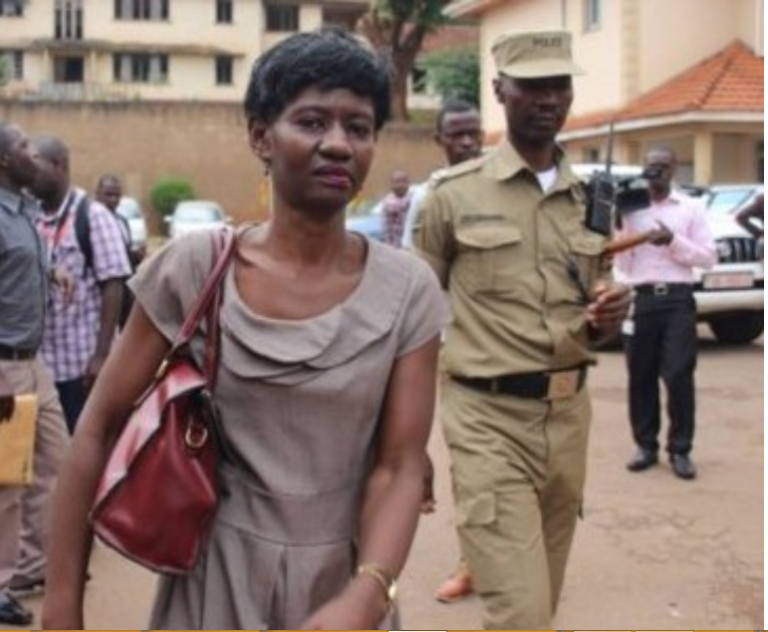
Member of Parliament for Katikamu North Constituency and currently a Minister without Portfolio  in the Ugandan government, Eng. Abraham Byandala, is under fire for assaulting a government-owned Bukedde Television journalist, Judith Naluggwa. He punched her in the stomach as she covered a corruption related story at the Anti-Corruption Court in Kampala.

Byandala, is accused of misusing public funds amounting to 24 billion Uganda Shillings  (about 7 million US dollars) allocated for the construction of the Mukono-Kyetume-Katosi road when he was the Works and Transport Minister. He was appearing at the Anti-Corruption court in Kampala for the hearing of the case.

“He confronted me as he left court. He asked why I was filming him. He punched me on the stomach and scratched my left hand before he walked away. All this happened in full view of journalists and the people at the Court.” Judith told HRNJ-Uganda.

Before this incident, Byandala is reported to have had a bitter exchange of words with an NTV journalist inside court for filming him. The minister reportedly tried to dodge being filmed by hiding his face in court.

Judith has since opened up a case of assault at Jinja Road Police station.

“HRNJ-Uganda has noted with deep concern politicians who use their political muscles to attack journalists. It is so disheartening for a government minister to assault a journalist at the court premises while she was performing her duties. We call upon the Uganda Police Force to thoroughly and expeditiously investigate this matter to ensure that Byandala faces the law.” said HRNJ-Uganda Legal officer, Diana Nandudu.

“Cases of politicians targeting journalists have skyrocketed. This cannot be allowed to go on. Eng. Byandala should resign as investigations take shape and President Yoweri Museveni should condemn the minister’s Actions. The police should thoroughly investigate this matter for Byandala to face the law. All members of the media, human rights organizations and other key players demand for justice to prevail in a bid to protect journalists and freedom of the media.” Said the HRNJ-Uganda National Coordinator, Robert Ssempala.

Uganda: Seven Journalists Attacked as Police and Army look on.

This Alert was originally published by HRNJ-Uganda on March 7, 2016.

Rowdy supporters of the ruling National Resistance Movement (NRM) supporters on March 04, 2016 attacked seven journalists, destroyed their gadgets and deleted recorded material from the cameras. The journalists were covering elections for special interest groups at Entebbe in Wakiso district at the Mayor’s Gardens.

The victim journalists included, Ssebalamu Kigongo of Bukedde television, Diana Kibuuka and Kakooza George William both of CBS radio, Ssempijja Godfrey of Bukedde Newspaper, Ssebaggala Sunday of NBS television, Mugganga Evie of Radio One and Shanitah Nabwabye of Pearl of Africa radio. The journalists accuse the police and army for not taking action against stick-wielding attackers descended on the reporters.

The journalists implicated the president’s protection force –the Special Forces Command (SFC) of being behind the attack. They told HRNJ-Uganda that this is not the first time they have suffered at the hands of the NRM supporters, police and army in Entebbe, especially when covering election related activities.

“I was beaten by a group of six NRM supporters. They kept saying that they don’t want the media. They kicked me, boxed me, beat me with a stick on the head. When they came to confront me, I walked away very fast for fear of aggression, but they followed me and started the physical attack. They wanted to smash my video camera but I held on to it. This group is commanded by one Capt. Barbara Barungi and Mark Dan Kamugira of SFC group. Barbara always engages journalist in verbal attacks.” Kigongo told HRNJ-Uganda.

This information was corroborated by the other six (6) victim journalists, who also gave HRNJ-Uganda accounts of how they were attacked by the said mob which included men and women. The journalists have opened up cases of assault and malicious damage to property at the Entebbe Central Police.

“This systematic and targeted attack on journalists must stop. The police serve a duty to protect Ugandans and their property including journalists doing their work. Since the presidential elections, the Uganda police has been implicated in a number of attacks against journalists. This is a blatant violation of the Police Act and other attendant laws. The police should ensure the safety and security of journalists at all times, they should systematically investigate all cases of attack on journalists.” Said the HRNJ-Uganda National Coordinator, Robert Ssempala

Issues not Insults: Language Monitoring Campaign Launched ahead of Ghana’s Elections

Issued by the MFWA on March 1, 2016.

As Ghana’s 2016 elections draw closer and campaigning intensifies, political tensions are fast building up. Insults and hate speech have become common in political debates and discussions in the media and other public platforms. Consequently, the use of indecent language and incidents of retaliatory provocative expressions by political party representatives are likely to be on the increase either online or offline. This has the potential of inciting citizens leading to possible violence if unchecked.

The Media foundation for West Africa therefore seeks to contribute to peaceful elections in Ghana in 2016 by building on the successes of its Language monitoring project in Ghana in 2012. The Language Monitoring project was widely commended as having contributed significantly to sanitising the airwaves in the lead up to the 2012 elections.

In 2016, the MFWA seeks to implement a special elections campaign dubbed “Issues Not Insults” under its project “Promoting Decent Language and Issues-based Campaigning for Peaceful Elections in Ghana in 2016”. The main focus of the project is to monitor, report, name and shame users of hate speech and indecent expressions on seventy (70) of the most influential radio stations across the country. The monitoring will be done over a nine-month period with reports being issued every two weeks. Other components of the project are public education on avoidance of hate speech and indecent campaign language, and advocating for professional media conduct that fosters issues-based discussions.

The project was officially launched at the International Press Centre to inform stakeholders, targets, and the Ghanaian public about the language monitoring exercise. It is expected to make the Ghanaian public aware so they are guided and measured in their language use on the airwaves before, during and after the elections.

Present were both the Chair of the National Media Commission, Mr. Kwasi Gyan-Apenteng and President of the Ghana Journalists Association, Dr. Affail Monney. Both expressed strong support for the project and commended MFWA for the exercise.
Representatives from other civil society organizations, stakeholders and the media were also present.

Click here to view the list of radio stations to be monitored this year.


MFWA, 36 Others Petition African Commission for Release of Detained Gambian Journalist

0

The Media Foundation for West Africa (MFWA) and 36 other freedom of expression organisations in Africa and across the globe have petitioned the African Commission on Human and People’s Rights to prevail on Gambian President Yahyah Jammeh to release a journalist who has been in detention for seven months.

Alhagie Abdoulie Ceesay, Manager of Taranga FM in Banjul, was first arrested on July 2, 2015, briefly released and re-arrested. After a two-week detention in which Ceesay was held incommunicado with no access to a lawyer or his family, he was brought before a Magistrates Court on August 4, 2015 and charged with a single count of sedition. The prosecution accused him of distributing photos of Gambian President Yahya Jammeh with a gun pointed at him.

On 18 November, while the case was still ongoing at the Magistrates Court, the state pressed a fresh seven-count charge against the journalist. These charges were a mere duplication of the first charge at the Magistrates court, except for that of “publication of false news.” The initial single count charge was later dropped.

According to MFWA’s sources, Ceesay has suffered from torture and maltreatment and is in deteriorating health. Despite his ill-health and eligibility for bail under Gambian law, and the landmark ruling of the African Court on Human and Peoples’ Rights, the High Court Judge has denied Ceesay clemency three times.

The MFWA together with the 36 African and global freedom of expression organisations, on March 2, 2016, urged the Chairperson of the African Commission on Human and Peoples’ Rights to prevail on The Gambia to release Ceesay.

“By this letter, we implore you to apply pressure on President Yahya Jammeh to ensure the release of journalist Alhagie Abdoulie Ceesay in consideration of his long period of detention and failing health, and to end the persistent crackdown on free expression,” the petitioners said. “In the words of Abdoulie’s brother, “It’s about time the world start acting or else we fear for the future of the family and the country’s most reputable media house Taranga FM.”

A copy of the petition was also sent to the U.N Special Rapporteur on Freedom of Opinion and Expression, David Kaye.

A copy of the Petition to African Commission on Human and Peoples’ Rights is available here. 

Uganda: Female journalist covering opposition leader arrested by police

0

Remmy Bahati a journalist with NBS Television was arrested on March 1, 2016,  by the Uganda Police Force as she relayed live events that were unfolding at the road leading to the home of opposition politician and former presidential candidate, Dr. Kizza Besigye, who is under house arrest at Kasangati. Her cameraman, Badebye Godfrey was hit in the head by police and occasioning him severe pain. A Forum for Democratic Change official, Ingird Turinawe, who protested Bahati’s arrest was also arrested and allegedly stripped naked before she was pushed into a van similar to the one used to arrest Besigye.

Four police officers and men in civilian clothes chased after and arrested Bahati as she relayed live the events. She was arrested and manhandled before pushing her into a tinted police van that was packed on the scene. She was detained at Kasangati police station for 30 minutes from where she was released without charge by the Police’s Director of Human Resource, Andrew Felix Kaweesi who sternly warned the journalist from camping at the road heading to Besigye’s home.

Immediately after her release, Bahati told HRNJ-Uganda that she was beaten and manhandled. “I was covering a story at the home of Besigye, when police arrested and detained me at Kasangati police station. While in the police van I was beaten and hair pulled by police officers inside the van. My cameraman Badebye Godfrey was also hit on the head and he is in severe pain. I was treated in a very inhuman manner; even when I offered myself to be arrested, the policemen beat me up and pulled my hair. They kept pushing me around.”

Bahati becomes the fifteenth journalist to be arrested and manhandled since February 27.

“The situation has become very pathetic for the media to operate. The Police have completely made it a crime to report opposition related activities by both the local and international journalists. The media stakeholders all need to come out to forge a pathway for the media. Drastic measures may be sought for in order to address this precarious situation. The media is evidently under attack by the State.” Said the HRNJ-Uganda National Coordinator, Robert Ssemapla.

Media clamp down as Police Arrest Six Journalists in Ugandan suburbs

This Alert was originally published by HRNJ-Uganda on February 29,  2016.

Uganda Police has on Monday February 29, 2016, arrested a total of eight (8) journalists; six at Kasangati on allegations of inciting violence and two others outside State House at Nakasero for alleged criminal trespass. The arrest happened as Dr. Besigye was anticipated to leave his home to attend an FDC party meeting, at their headquarters in Najjanankubi. He was immediately arrested and whisked away by security. Its the ninth time the opposition leader is being arrested since the Presidential and parliamentary elections held on February 18, 2016.

The journalists at Kasangati were covering the ongoing story of the in-house arrest of Dr. Kizza Besigye, a former Presidential candidate on the Forum for Democratic Change (FDC) ticket. They were detained at Kasangati Division police station, while the duo was arrested when covering a story of two abandoned piglets outside the State House; they were detained at the Central Police Station, Kampala.

The Kasangati victims included; Elijah Turyagumanawe of NBS television, Dean Saava Lubowa of NBS, Mukose Arnold of Salt Radio, Sendegeya Mohammed of CBS, Kiwanuka Stephen and Nakiwala Faridah of BBS television who were arrested in the morning near Dr. Besigye’ residence on the orders of Kasangati Divisional Police Commander, James Kawalya. They were taken to Kasangati police station, detained for a short time and released without any charge.

In Kampala, police grabbed Abubaker Muwonge of China Central Television (CCTV) and Francis Otucu of Red Pepper Publications accusing them of filming a box of piglets that was dumped outside of State House by unknown people. Police claim that they were trespassing in the premises of State House. Muwonge’s video camera and smart phone were confiscated by the police and forced to reveal the password of his phone. Muwonge was later released on police bond after being detained for over 7 hours in police cells. He was charged with criminal trespass.

Lubowa told HRNJ-Uganda that, “I don’t know if police has a different Constitution that allows them to stop us from doing our work; we went to Besigye’s home when we heard that he was going to move out. We had gone to do our work like we normally do only for the Division Police Commander of Kasangati Police Station James Kawalya to order for our arrest. They took us to Kasangati police station where they held us for some time. My colleague Elijah Turyagumanawe of NBS TV was detained in police cells.”

On Saturday February 27, 2016, six journalists were arrested near Besigye’s home, released without charge and ordered to vacate the area or risk facing the consequences. Last week police pepper-sprayed Isaac Kasamani, a correspondent for AFP, as he took pictures of Besigye’ arrest. It has become increasingly dangerous for journalists covering the activities around Besigye’s home and his continued house incarceration.

‘We highly condemn the continued actions by the Uganda Police Force of arresting and detaining journalists without any justifiable reason. Such actions violate their constitutionally guaranteed right of practicing their profession. The police should stop this continued persecution of journalists.” Said the HRNJ-Uganda National Coordinator, Robert Ssempala.

Uganda: Police arrests journalists covering meeting of opposition leaders

0

Six journalists were on Saturday February 27, 2016 arrested by Ugandan police, for attempting to cover the visit of opposition leader Amama Mbabazi to the home of Forum for Democratic Change (FDC)’ Dr. Kizza Besigye, who is under house arrest. They were bundled into a police van, driven away and later released without charge. Police cited security in the area as the reason for their arrest.

Journalists who were arrested include, Abubaker Lubowa and Mukiibi Eriasa Sserunjogi both of the Daily Monitor, Abubaker Muhamed Zirabamuzaale, Nicholas Bumulanzeeki of the Observer, Mugerwa Gerald of Delta TV and Suhair Boss Mugabi of NTV who were standing on the opposite side of the road towards Dr Kizza Besigye’s home awaiting the visit of former prime minister and presidential aspirant Amama Mbabazi when police pounced on them. The arrest was ordered Division Police Commander, Kasangati, James Kawalya. Two TV journalists, Jordan Mubangizi and Moses Namayo, who eluded the arrest, were chased by police when they noticed that they were recording the fracas. They jumped into their car and sped off.

The journalists told HRNJ-Uganda that they were beaten inside the police van. “When they put us in the police van, one of the police officers jumped over and hit me in the back. We were at their mercy, they had guns, tear gas and pepper spray,” one of the victims told HRNJ-Uganda. He added “we suspect the intention was to stop us from covering Amama’s visit to Besigye’s home”.

The journalists were taken before Police Human Resource Director, Andrew Felix Kaweesi who released them. He ordered them to leave the area citing ‘security reasons’. Kaweesi told HRNJ-Uganda that “the journalists will be called by police in case of any news.”

Amama Mbabazi who arrived with food items was also barred by police from accessing Besigye’s home. Besigye was put under house arrest a day after the presidential and parliamentary elections, held on February 18, 2016. Police claims that, the former presidential contestants want to cause chaos in the city. Police have since, barred journalists from accessing Besigye’s residence and decided to camp at the road leading to his home to capture the events as they unfold.

Earlier this week, AFP correspondent, Isaac Kasamani was pepper-sprayed while taking a photograph of police arresting Besigye. Police said they are investigating two white journalists who demanded that DPC Kawalya explains and reveals the identity of the officer who pepper-sprayed Kasamani.

“The security forces and other government authorities should desist from character assassinating journalists assigned to cover opposition related activities. They should let the media freely cover any form of news including from those critical of the government.” Said the HRNJ-Uganda National Coordinator, Robert Ssempala

Uganda: Journalists Targeted for Covering Political Campaigns

Issued by the HRNJ-Uganda on February 26, 2016.

Human Rights Network for Journalists–Uganda (HRNJ-Uganda) is a network of human rights journalists in Uganda working towards enhancing the promotion, protection and respect of human rights through defending and building the capacities of journalists. It was registered in 2006 amidst glaring abuses targeting the media and deteriorating human rights situation in the country.

HRNJ-U monitors and documents journalists‟ rights, violations and abuses in Uganda and contributes towards the realization of media freedoms and good governance in the country.

HRNJ-Uganda has been monitoring and observing the rights of journalists, their safety and security during the electioneering period. We paid particular attention to whether journalists were free to gather and impart information without unnecessary interference, intimidation or obstruction.

We noticed that although the presidential, parliamentary and district council elections were generally peaceful, there were several violations and unnecessary interference in the work of journalists and media houses, such as; destruction of journalistic tools, physical assault, intimidation and closure of a media house. HRNJ-Uganda recorded at least seventy (70) cases; which also included three alleged shootings at reporters.

ASSAULT VICTIMS:

Between October 2015 and February 25th, 2016, seventeen (17) journalists were assaulted by contestants, their supporters, Police and UPDF Special Forces Command.

On February 1, 2016, Margaret Kayondo, a correspondent of Radio Simba in Sembabule was assaulted by four UPDF officers while covering a scuffle between NRM supporters and the police in Lwemiyaga, Sembabule District. Her audio recorder and smart phone which she was using to take pictures were confiscated. They deleted all the recorded material from the recorder and the phone.

On January 11, 2016, Golooba Ali of Buddu FM in Masaka was battered by the private guards of Hajji Muyanja Mbabali „the NRM Member of Parliament elect for Bukoto South constituency in Masaka District.

On the Election Day (February 18, 2016), Latiff Maganda of Step Radio and TV in Mbale and Denis Oluka –the Bureau Chief of Uganda Radio Network in Mbale were mobbed allegedly by supporters of the NRM Bulambuli District Woman Member of Parliament elect, Sarah Wekomba.

On November, 16 2015, Isaac Kugonza of Delta TV was shot on the head by police as they stopped and arrested the Lord Mayor Elias Lukwago from going to the Electoral Commission seeking for clarification on Mayoral nominations. The other victim journalists were Enoch Matovu of NTV based in Mityana and Radio One‟ Mukisa Vincent based in Jinja.

On February 20, 2016, a security officer in civilian clothes pepper sprayed Isaac Kasamani –a correspondent for AFP while he was covering the arrest of Dr. Kizza Besigye at Kasangati, Wakiso district. The DPC for Kasangati police, James Kawalya declined to reveal the identity of the officer, but instead blaming journalists for disobeying security orders not to access the Besigye arrest news. As a result, the police is threatening with arrest to all journalists who demanded that Kawalya reveals the identity of the culprit.

Most foreign correspondents have since fled Uganda in fear of arrest.

Of the eighteen assault cases recorded, only one case is being prosecuted and police has not effectively investigated the rest despite the fact that they were reported to them.

MALICIOUS DAMAGE:

Twelve (12) cases of malicious damage to property and confiscation of journalistic tools were also recorded during the electioneering period. On January 10, 2016, Ronald Galiwango of NTV had his camera confiscated by the District Police Commander of Moroto George Obia while he was covering the opposition presidential candidate Dr. Kizza Besigye‟s campaigns. Other journalists whose tools were confiscated by the same police officer include; Ernest Kyazze of Bukedde TV, Julius Ariongo -a Daily Monitor correspondent in Moroto District had his camera savagely damaged. None of the cases has been investigated to their logical conclusion.

ARREST AND DETENTION:

HRNJ-Uganda documented ten (10) cases of journalists arrested and detained over electoral related reporting. On February 13, police in Lira raided Radio North, arrested and detained the editor, Richard Mungu Jakican with other six politicians who were discussing the presidential elections debate that was being relayed live from Kampala Serena Hotel. The police accused them of defacing candidate Museveni‟s campaign posters. Among them were parliamentary contestants on the Go Forward ticket. They were charged with malicious damage to property and granted bail after four days in detention. The affected radio station belongs to a Go Forward area mobilizer.

On February 6, 2016, police in Abim district, arrested three journalists including BBC‟s Catherine Byaruhanga, Kelvin Brown –who is based in Kenya and NTV‟ Sam Lawino while filming Abim hospital, they were forced to delete their footage before releasing them, but they declined. They were release after four hours without any charges preferred.

DENIAL OF ACCESS TO NEWS:

HRNJ-Uganda recorded over thirty (30) cases in which journalists were blocked form covering events by police. Since February 20, 2016, when Dr. Kizza Besigye was put under house arrest at his home in Kasangati, -Wakiso district, on different occasions the police and army forces have blocked over 20 local reporters and over 10 foreign correspondents and denied them access to covering the news of his arrest at a time when he tries to leave his home. No explanation is advanced by the security for denying journalists access to news coverage.

On February 10, 2016, police in Kalangala district stopped four (4) journalists from covering the arrest of a parliamentary contestant for Bujumba constituency. In January, NTV was barred form reporting about President Museveni‟s campaign rallies because they declined to a directive to use news video foot-age provided by the candidate‟s press team, reportedly captured by a drone.

THREATS AND INTIMIDATION:

The Inspector General of Police, Gen. Kale Kayihura, senior police officers, political candidates and their supporters in different parts of the country together with H.E President Museveni and some ruling NRM party spokespersons have on several occasions threatened journalists over what they have termed as biased and unprofessional reporting of electoral issues, hence branding journalists as “Rumor mongers, traitors, among others names. In October 2015, Gen Kayihura warned journalists against extensive coverage of the opposition, saying that “we are going to go after you”. He was responding to media coverage of the alleged police undressing of an FDC activist during her arrest along Masaka-Mbarara road. The Arua District Police Commander, Jonathan Musinguzi threatened Arua One FM journalist as to why she “was moving with FDC politicians.” In Iganga, a Parliamentary candidate for Kigulu North constituency, Kyakulaga Bwino Fred made calls and sent a threatening text message to a Red Pepper journalist on February 5 that “you are in for a shock of your life, watch this space” over a news story weighing the performance and rating of the candidates in the race. Although the matter was reported to police, no investigations have been carried out.

On January 21, 2016, Endigyito FM in Western Uganda was switched off by the State broadcasting regulator, Uganda Communications Commission (UCC) under unclear circumstances. The radio had just hosted former Prime Minister of Uganda and Presidential candidate John Patrick Amama Mbabazi.

ELECTORAL COMMISSION:

During the elections, journalists did not encounter difficulties in accessing polling stations for news in spite of the earlier orders issued by the chairperson of Electoral Commission (EC) not to access polling stations with their phones and recording gadgets. Many interviewed said the returning officers were cooperative and readily gave information. However in Lwengo district the Returning Officer cancelled accreditation of a Bukedde TV journalist accusing her of being biased in her reporting. It was only re-instated after intervention by fellow colleagues and other players.

The EC however did not come out strongly on the persistent attacks and intimidation of the media by candidates and their supporters during the campaign period. This escalated attacks on journalists by candidates and their supporters.

IN A NUT SHELL:

Majority of the victim journalists and media houses were targeted while on duty reporting opposition related activities. The police and NRM candidates and or with their supporters took a lion‟s share in violating the media and journalists rights and freedoms. Majority of these cases were reported to authorities like police but barely investigated.

The human rights situation therefore remains fragile, the State and its operatives continue to violate journalists‟ and peoples‟ rights with impunity.

RECOMMENDATIONS;

1. The Electoral commission should come out strongly to ensure that candidates respect the rights and freedoms of the media. In the same vein, EC should also desist from passing unfair regulations against the media which inhibit a free operating environment.

2. Political candidates together with their supporters should desist from targeting journalists and media houses during campaigns and elections season.

3. The police should arrest, investigate and take to court perpetrators of violence and threats against journalists and media houses during political campaigns

4. The police and army should desist from targeting journalists and media houses giving coverage to the opposition and other dissenting views

5. The media should remain fair, balanced and objective to all candidates during the campaigns. The media should also be united to defend their rights and freedoms during such times.

6. The Donor, Diplomatic and International community should ensure that the State respects and promotes media rights and freedoms at all times.

Given the crucial role played by the media in entrenching true democracy, all the various stakeholders should work hand in hand to create a conducive operating environment.

Uganda Elections: AFP Journalist pepper-sprayed by Police

This Alert was originally published by HRNJ-Uganda on February 22, 2016.

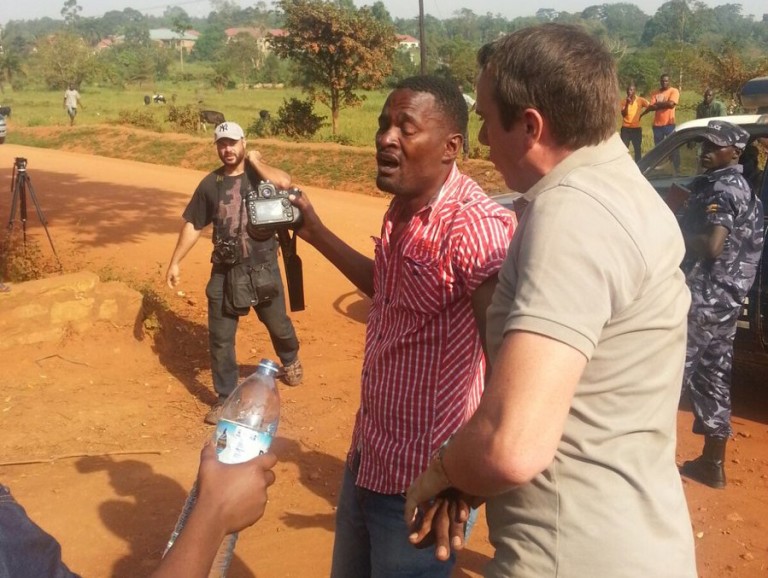
Agence France Presse, AFP journalist, Isaac Kasamani, has been pepper-sprayed by Uganda police, earlier today, February 22, 2016 while covering the arrest of opposition leader, Kizza Besigye, from his residence in Wakiso District, central Uganda. Another journalist, Abubaker Lubowa narrowly escaped the same fate, while other journalists were blocked from accessing the news scene.

Since Saturday February 20, the police, under the command of the Kasangati Division Commander, James Kawalya, have barred journalists from accessing the home of Kizza Besigye and taking pictures of the unfolding events.

“They did not want us to cover the arrest of Besigye, but when I saw Besigye’s car approaching the police blockade, I moved closer but the police was pushing me telling me not to take pictures. When I took the pictures a plain clothed man pepper sprayed me in the eyes. There was also a police officer in civilian attire taking our photographs.” Kasamani told HRNJ-Uganda.

Abubaker Lubowa of the Daily Monitor who was also taking pictures with Kasamani told HRNJ-Uganda that “they were targeting both of us but I narrowly escaped the pepper spray. The DPC Kawalya handed the plain clothed man with the pepper spray and ordered him to work on us as we photographed Besigye.”

However, the DPC Kasangati, James Kawalya when contacted by HRNJ-Uganda said “I cannot tell who did it but I told journalists not to come close to the blockade, when they saw Besigye coming they disobeyed our orders.”

“Police has on several occasions targeted journalists covering the opposition politicians without any justification. It was unreasonable for the police to pepper spray a journalist, since he was not a threat by doing his work. Blocking journalists from accessing news scenes is unjustified, intended to deny Ugandans their right to know what is happening in their country. Police should take action against perpetrators of violence against journalists,” said Robert Ssempala the HRNJ-Uganda National Coordinator.

HRNJ-Uganda

Zambia: MISA condemns Police interference in operations of Radio Stations

Originally issued by MISA Zambia on February 19, 2016.

MISA Zambia has condemned the police command in Eastern Province for interfering with the operations of radio stations in the province by directing them to seek police clearance whenever they intend to host high profile guests on radio.

MISA has obtained a letter in which the order was made by Eastern Province Police Commissioner, Alex Chilufya, to various radio stations in Chipata.

We wish to inform the Police command that such a directive amounts to an unreasonable and unconstitutional limitation of freedom of expression and media freedom as guaranteed in article 20 of the constitution.

We would also like to take this opportunity to educate the Police command on the role of the Independent Broadcasting Authority, which is the bonafide regulator of broadcasting houses in Zambia and has authority to preside over the conduct of broadcasters, including radio stations in Chipata where the order was issued.

As the radio programmes are held in-doors and only broadcast to the masses, there is no need for police clearance as it is within the right of the radio stations to host any guest, provided they do not contravene the ethical standards as agreed with the IBA, which take into consideration even other provisions such as the electoral code of conduct.

We therefore call on the Police to immediately desist from interfering in the operations of media houses and instead be proactive enough to thwart the increasing attacks on media houses such as that on Radio Breeze FM during a live broadcast when they hosted Rainbow Party leader Wynter Kabimba.

Another incident is where known PF cadres urinated in the mouth of a Post Newspaper journalist Peter Sukwa while his counterpart Kelvin Phiri of Feel Free Radio was badly assaulted.. Other attacks include those on Radio Icengelo in Kitwe, Sun FM in Ndola and Chikaya Lundazi.

We urge all media houses and journalists in Chipata that received the directive from Commissioner Chilufya not to be intimidated and to continue providing space for participatory democracy without any fear or favour.

As we get closer to the August 11 elections, it is important for all stakeholders adhere to democratic election principles and to desist from violence if the country is to hold free and fair elections.

End//

MFWA’s Partner in Mali Mobilises Media to Search for Missing Journalist

The national partner of MFWA in Mali, la Maison de la Presse (MP) has mobilised the media in the country to work towards unraveling the disappearance of Birama Touré, a reporter with the investigative weekly, Le Sphinx.

On January 29, 2016, Birama reportedly went to visit his extended family in a suburb of the Malian capital, Bamako.  At about 7pm, he left his family house for his residence at Sébènikoro, also in Bamako but has not been heard from nor seen since then.

To intensify and coordinate efforts to find the missing journalist, MP mobilised journalists from across Mali for a press conference and brainstorming exercise. The president of MP, Dramane Aliou Koné said a supporting committee has been created to sustain the sensitisation campaign by publishing regular reports and information on the matter. He also indicated that the MP has secured the services a lawyer to handle all the legal aspects of the case.

“We are well mobilised for now. The Prime Minister has instructed two of his ministries to do everything possible to find our colleague. Every day, we make contact with the authorities to assess the progress of the search effort,” Koné affirmed.

The press conference was attended by more than 100 journalists who pledged to maintain the matter of their colleague’s disappearance constantly in the headlines and help intensify the search for him.

A banner alerting the public about the disappearance of Toure was also distributed by the MP as part of the campaign to find Birama Touré.