


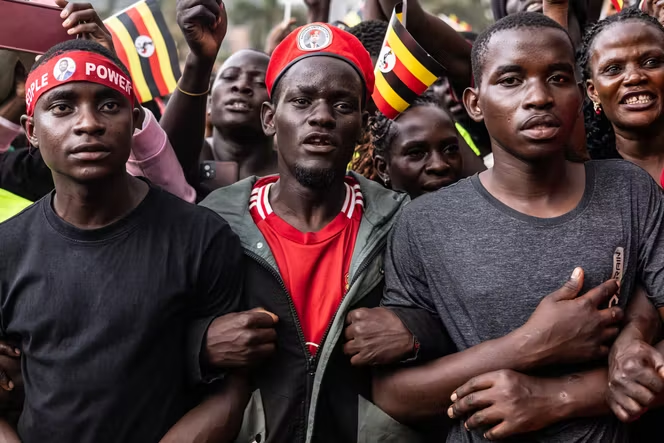
As Ugandans prepare to head to the polls on January 15, 2026, the country finds itself gripped not by open democratic contestation, but by a growing climate of fear, restriction, and repression. In the days leading up to the election, state actions have systematically narrowed civic space, undermined independent oversight, and curtailed citizens’ freedom to express themselves, associate, and access information.
The African Freedom of Expression Exchange (AFEX) is deeply concerned by the pattern of coordinated measures adopted by Ugandan authorities, which collectively amount to a serious erosion of fundamental freedoms at a critical moment in the country’s democratic life.
On January 12, 2026, the National Bureau for Non-Governmental Organizations (NGO Bureau) ordered at least 10 civil society organizations, including human rights, media-freedom, and election-monitoring groups. These organizations were instructed to halt operations on vague grounds of “national security,” citing intelligence that they engaged in activities “prejudicial to the law of Uganda,” effectively removing independent voices that play a crucial role in safeguarding transparency, documenting abuses, and supporting citizens during electoral processes. The timing of these suspensions –just days before voting– has raised alarm about the intent to weaken scrutiny and silence dissent.
Almost simultaneously, the Uganda Communications Commission (UCC) imposed a nationwide internet shutdown on January 13, 2026, at around 6 p.m. local time, cutting off access to social media platforms, messaging services, and online news sources. This digital blackout has severely disrupted the flow of information, impeded independent reporting, and prevented citizens from communicating freely or sharing real-time accounts of electoral developments. In an era when the internet is central to participation, oversight, and accountability, such a shutdown amounts to collective silencing.
These developments have unfolded against a backdrop of heavy security deployment, intimidation of opposition supporters, arbitrary arrests of activists, and reports of abductions and excessive use of force. The United Nations Human Rights Office has described the pre-election environment as one marked by “widespread repression,” reinforcing concerns that Ugandans are being denied the conditions necessary for a genuinely free and fair election.
Journalists have also been placed under increasing pressure. Restrictions on live broadcasts, harassment of media workers, and the internet blackout have combined to weaken press freedom and deny the public access to timely, accurate, and independent information. The suppression of the media during an election period undermines democratic accountability.
Taken together, these actions represent clear violations of Uganda’s constitutional guarantees and its obligations under regional and international human rights instruments, including the African Charter on Human and Peoples’ Rights. They undermine the rights to freedom of expression, association, assembly, and access to information. These rights are not optional during elections, but essential to their legitimacy.
AFEX condemns these measures and calls on the government of Uganda to immediately restore full internet access, lift restrictions on civil society organisations, and ensure that journalists, activists, opposition actors, and ordinary citizens can exercise their rights without fear of retaliation. Security forces must act with restraint and professionalism, respecting the rule of law and the rights of all individuals.
AFEX further urges the African Union, the East African Community, and international partners to remain vigilant, to speak out against abuses, and to support efforts that promote transparency, accountability, and respect for human rights throughout the electoral process.
Democracy cannot thrive in darkness. When citizens are silenced, observers sidelined, and information restricted, elections lose their meaning. The legitimacy of Uganda’s 2026 elections will ultimately be judged not only by the casting of ballots, but by whether fundamental freedoms were respected before, during, and after polling day.
AFEX stands in solidarity with the people of Uganda and reaffirms that freedom of expression and civic participation are not threats to democracy but its foundation.
